
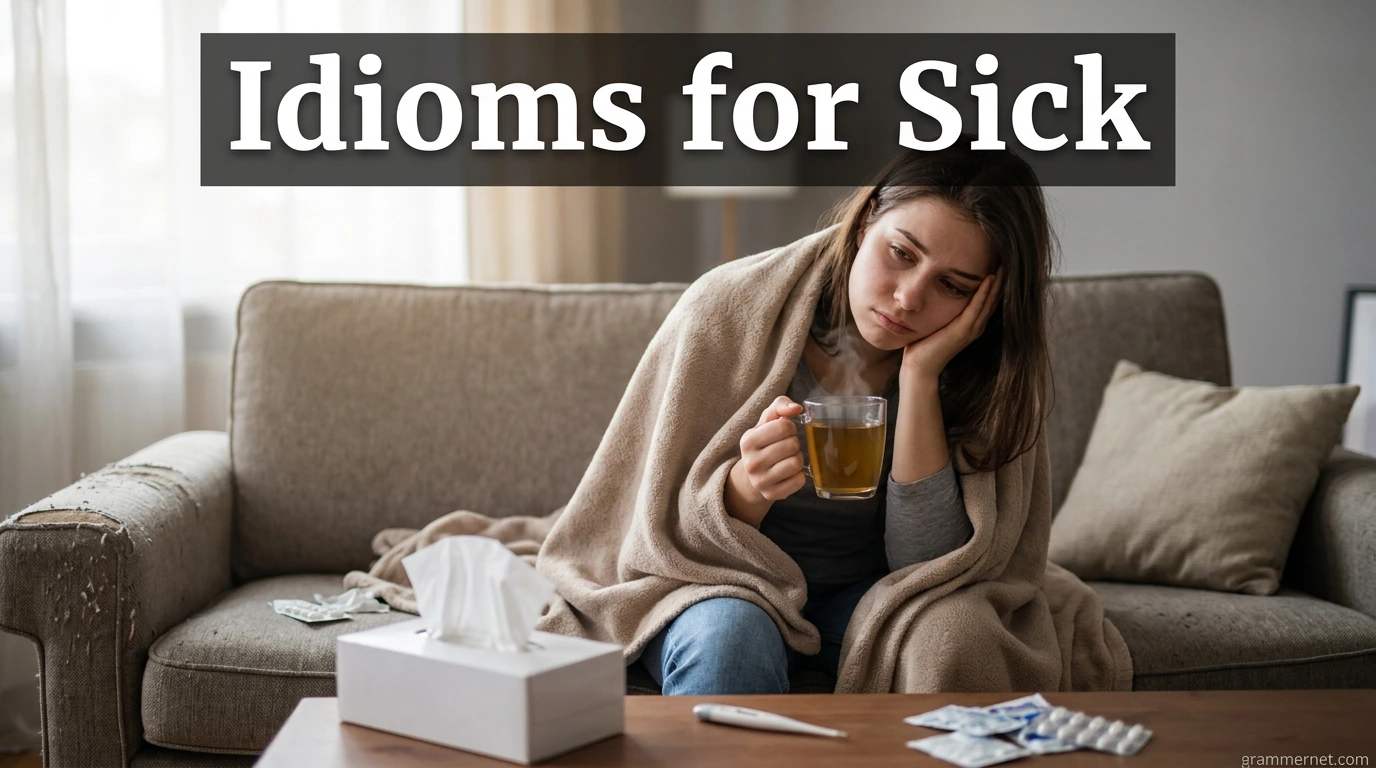
Talking about illness is part of everyday communication, whether you’re describing how you feel, explaining an absence, or showing empathy to someone else.
Learning idioms for sick helps English learners express health conditions more naturally and understand how native speakers talk in real life.
These idioms add color, emotion, and clarity to conversations—especially in casual settings. By mastering them, you can sound more fluent, connect better with others, and confidently discuss health-related situations in English.
What Are Idioms for Sick?
Idioms for sick are expressions used to describe illness, discomfort, or feeling unwell in a figurative way. Instead of using direct words like “ill” or “unwell,” English speakers often use creative phrases.
For example, when someone says “I’m under the weather,” they don’t mean they are physically under rain—they mean they feel sick.
These idioms are commonly used in daily conversations, workplaces, and informal writing.
Why Learning These Idioms Matters
Understanding idioms for sick helps you:
- describe symptoms more naturally
- understand everyday conversations
- communicate politely when unwell
- express empathy toward others
- improve fluency and listening skills
They are especially useful in casual speech, emails, and workplace communication.
Common Idioms for Sick (With Meanings, Examples, and Use Cases)
1. Under the Weather
Meaning: Feeling slightly sick or unwell.
Example: I’m feeling a bit under the weather today.
Alternative expressions: not feeling well, a little sick
Typical use cases: casual conversations, workplace excuses
Fun fact / origin: This phrase may come from sailors who felt ill and stayed below deck (under the weather).
2. Come Down With Something
Meaning: To start getting sick.
Example: I think I’m coming down with a cold.
Alternative expressions: getting sick, falling ill
Typical use cases: early symptoms, mild illness
3. As Sick as a Dog
Meaning: Very sick.
Example: He was as sick as a dog last night.
Alternative expressions: extremely ill, very unwell
Typical use cases: strong illness, informal speech
4. Feel Like Death Warmed Up
Meaning: Feeling extremely ill or exhausted.
Example: I feel like death warmed up today.
Alternative expressions: very sick, exhausted
Typical use cases: informal conversations, exaggeration
5. Off Color
Meaning: Not feeling well.
Example: She looks a bit off color today.
Alternative expressions: unwell, pale, sick
Typical use cases: observations, polite conversations
6. Run Down
Meaning: Feeling tired and weak due to illness or stress.
Example: I’ve been feeling run down lately.
Alternative expressions: exhausted, worn out
Typical use cases: stress, fatigue, mild sickness
7. Green Around the Gills
Meaning: Looking sick, especially nauseous.
Example: You look green around the gills—are you okay?
Alternative expressions: nauseous, pale
Typical use cases: motion sickness, stomach issues
8. Out of Action
Meaning: Unable to function due to illness or injury.
Example: He’s out of action with the flu.
Alternative expressions: inactive, unable to work
Typical use cases: sports, work, daily life
9. On One’s Last Legs
Meaning: Extremely weak or close to collapse.
Example: After the illness, he was on his last legs.
Alternative expressions: very weak, exhausted
Typical use cases: serious fatigue, illness
10. Sick as a Parrot
Meaning: Very disappointed (British English), not physically ill.
Example: He was sick as a parrot after losing the match.
Alternative expressions: very upset, disappointed
Typical use cases: emotions, sports, informal speech
Important note: This idiom is about emotions, not health.
11. Throw Up
Meaning: To vomit.
Example: He threw up after eating bad food.
Alternative expressions: vomit, be sick
Typical use cases: illness, food poisoning
12. Catch a Bug
Meaning: To become sick, especially with a virus.
Example: I think I caught a bug at work.
Alternative expressions: get sick, catch an illness
Typical use cases: common colds, infections
13. Under the Knife
Meaning: To undergo surgery.
Example: She’s going under the knife tomorrow.
Alternative expressions: have surgery, operation
Typical use cases: medical procedures
14. Back on Your Feet
Meaning: Recovering from illness.
Example: He’s back on his feet after a week.
Alternative expressions: recovered, healthy again
Typical use cases: recovery stage
15. In Poor Shape
Meaning: Not in good health.
Example: He’s been in poor shape lately.
Alternative expressions: unhealthy, weak
Typical use cases: general health description
Idioms for Sick Grouped by Context
Mild Illness
- under the weather
- off color
- come down with something
Example: I’m under the weather and might have come down with something.
Serious Illness
- as sick as a dog
- feel like death warmed up
- on one’s last legs
Example: He was as sick as a dog and on his last legs.
Physical Symptoms
- green around the gills
- throw up
- run down
Example: She looked green around the gills and threw up.
Recovery and Improvement
- back on your feet
- out of action
Example: He was out of action but is now back on his feet.
Emotional (Not Physical)
- sick as a parrot
Example: He was sick as a parrot after the loss.
Tips for Using Idioms for Sick Effectively
Use polite idioms like “under the weather” in professional settings. Use stronger idioms only in informal situations. Pay attention to tone—some idioms exaggerate illness. Practice using them in real conversations.
Common Mistakes to Avoid
Do not confuse emotional idioms with physical illness (e.g., sick as a parrot). Avoid using very informal idioms in formal writing. Do not translate idioms literally. Use the correct context—some idioms describe mild illness, others serious.
Fun Facts About Sick Idioms
Many idioms come from:
- body appearance (green around the gills)
- animal comparisons (sick as a dog)
- historical or nautical language (under the weather)
These make expressions more vivid and memorable.
Interactive Practice Activities
Easy Level – Fill in the Blanks
- I’m feeling under the _______.
- He’s as sick as a _______.
- She looks green around the _______.
Answers:
- weather
- dog
- gills
Medium Level – Match the Idiom
IdiomMeaningRun downABack on your feetB
A. Tired and weak B. Recovered
Answers: Run down → A Back on your feet → B
Advanced Level – Choose the Correct Idiom
- Someone starting to feel sick
- Someone fully recovered
- Someone very nauseous
Answers:
- Come down with something
- Back on your feet
- Green around the gills
Bonus Practice
Write sentences using:
- under the weather
- catch a bug
- out of action
Sample answers: I’m under the weather today. I think I caught a bug at work. He’s out of action due to illness.
Suggestions for Visuals and Infographics
- body icons showing symptoms
- charts of mild vs severe illness idioms
- emoji-based visuals
- comparison tables of literal vs idiomatic meanings
These visuals help learners quickly understand and remember idioms.
Best Ways to Practice These Idioms
Listen to how native speakers talk about illness. Use these idioms in daily conversations. Write short dialogues about health situations. Practice speaking aloud for better fluency.
FAQs
1. What are idioms for sick?
They are expressions used to describe illness in a non-literal, creative way.
2. Why should I learn these idioms?
They help you sound natural and understand real conversations.
3. Are these idioms formal or informal?
Most are informal, but some can be used in polite situations.
4. Which idiom is most common?
“Under the weather” is very common and widely used.
5. Can I use these idioms at work?
Yes, especially polite ones like “under the weather.”
6. How can I remember them easily?
Practice regularly and group them by context.
Conclusion
Learning idioms for sick is an important step in becoming fluent in English. These expressions allow you to describe illness, symptoms, and recovery in a natural and engaging way. They also help you understand everyday conversations more easily.
By practicing these idioms regularly and using them in real-life situations, you can improve both your speaking and listening skills. Keep learning, stay consistent, and soon you’ll be able to talk about health in English with confidence and ease.
