
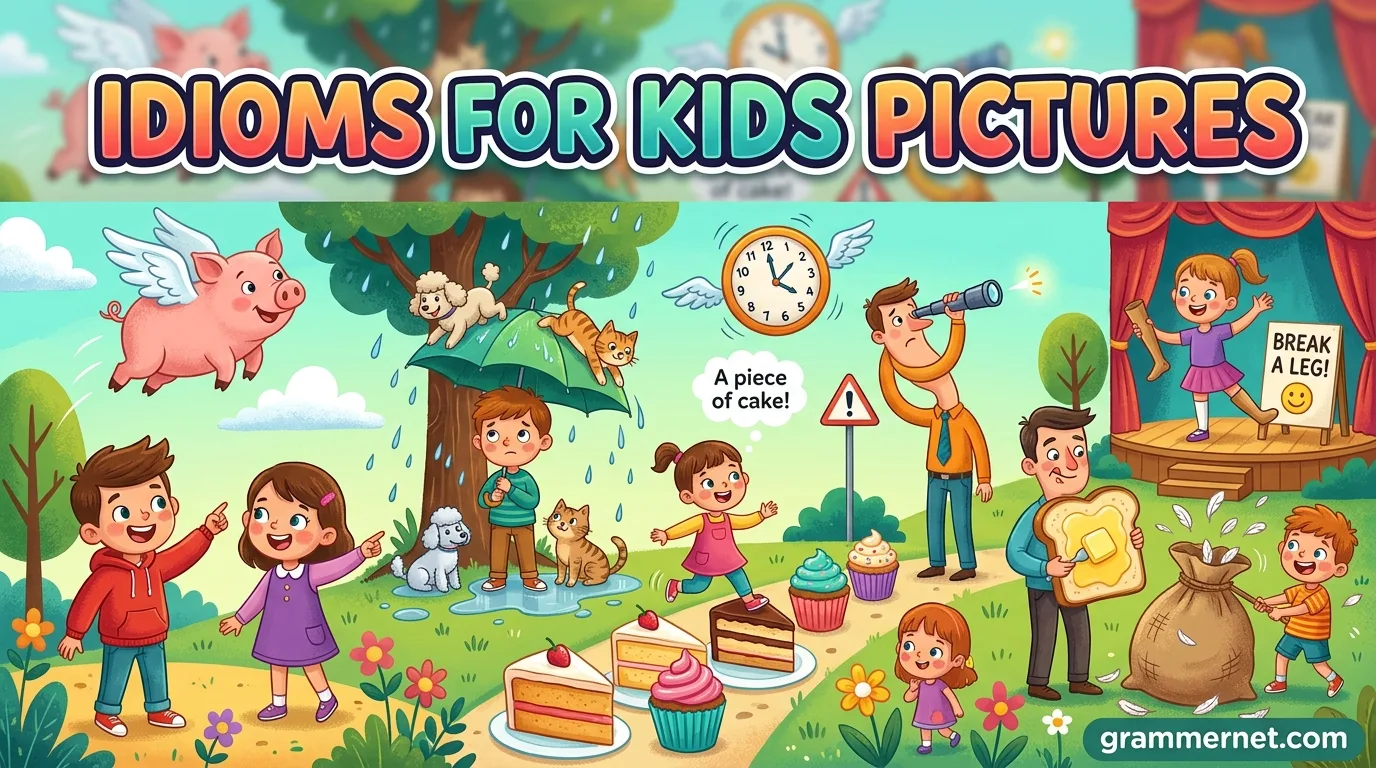
Learning English can be fun, especially when words come alive through images. Idioms for kids pictures combine visual learning with creative language, making it easier for children, students, and even professionals to understand figurative expressions.
Instead of memorizing meanings, learners can see what idioms represent, improving comprehension and memory.
This approach boosts confidence, creativity, and communication skills in real-life situations such as storytelling, classroom learning, and everyday conversations.
What Are Idioms for Kids Pictures?
Idioms for kids pictures are visual representations of idiomatic expressions. Since idioms often have meanings different from their literal words, pictures help learners connect the phrase with its intended meaning.
For example, a picture of a child literally holding a bucket while kicking it can help explain why “kick the bucket” does not actually mean kicking a bucket—but refers to dying (though this one should be used carefully with kids).
Why Use Pictures to Learn Idioms?
Using images to learn idioms offers several benefits:
- Makes abstract expressions easier to understand
- Improves memory through visual association
- Engages young learners and keeps learning fun
- Helps non-native speakers grasp cultural meanings
- Encourages creativity and storytelling
Popular Idioms for Kids with Picture Ideas
Below are kid-friendly idioms along with suggestions for how they can be illustrated.
1. A Piece of Cake
Meaning: Something very easy
Picture Idea: A child happily eating a slice of cake while finishing homework easily
Example: This puzzle is a piece of cake!
Alternative expressions: easy as pie, very simple
Use case: schoolwork, simple tasks
2. Break the Ice
Meaning: To start a conversation or make people feel comfortable
Picture Idea: Kids breaking a block of ice and then talking and laughing
Example: The teacher told a joke to break the ice.
Alternative expressions: start talking, ease tension
Fun fact: Comes from ships breaking ice to move forward.
3. Under the Weather
Meaning: Feeling sick
Picture Idea: A child standing under a rain cloud looking tired
Example: I feel under the weather today.
Alternative expressions: feeling ill, not well
4. Let the Cat Out of the Bag
Meaning: To reveal a secret
Picture Idea: A bag opening with a cat jumping out
Example: She let the cat out of the bag about the surprise.
Alternative expressions: spill the secret, reveal truth
5. Hit the Books
Meaning: To study
Picture Idea: A child gently hitting a stack of books and then studying
Example: I need to hit the books before the exam.
Alternative expressions: study hard, revise
6. Cry Over Spilled Milk
Meaning: To be upset over something that cannot be fixed
Picture Idea: Milk spilled on the floor and a child crying
Example: Don’t cry over spilled milk.
Alternative expressions: move on, don’t worry
7. Hold Your Horses
Meaning: Wait or slow down
Picture Idea: A child holding ropes tied to playful horses
Example: Hold your horses! I’m coming.
Alternative expressions: wait a moment, slow down
8. Busy as a Bee
Meaning: Very busy
Picture Idea: A bee working around flowers
Example: She is as busy as a bee today.
Alternative expressions: very active, hardworking
9. On Cloud Nine
Meaning: Very happy
Picture Idea: A child sitting on a fluffy cloud smiling
Example: He was on cloud nine after winning.
Alternative expressions: extremely happy, joyful
10. The Early Bird Catches the Worm
Meaning: Success comes to those who act early
Picture Idea: A bird catching a worm in the morning
Example: Wake up early—the early bird catches the worm.
Alternative expressions: be early, act quickly
Grouping Idioms by Learning Context
School and Study
- hit the books
- piece of cake
Emotions and Feelings
- on cloud nine
- under the weather
Behavior and Advice
- hold your horses
- cry over spilled milk
Communication
- break the ice
- let the cat out of the bag
Tips for Teaching Idioms with Pictures
Use colorful illustrations to grab attention Encourage kids to draw their own idioms Combine storytelling with visuals Use flashcards with images and meanings Repeat idioms in different contexts
Common Mistakes to Avoid
Avoid explaining idioms only literally Do not use complex idioms for beginners Avoid overwhelming learners with too many idioms at once Do not skip examples—context is key
Interactive Activities and Exercises
Easy Level – Match the Picture to the Idiom
- A smiling child on a cloud → ______
- A bee working hard → ______
Answers:
- On cloud nine
- Busy as a bee
Medium Level – Fill in the Blanks
- I need to ______ the books before my test.
- Don’t ______ over spilled milk.
Answers:
- hit
- cry
Advanced Level – Create Your Own Picture
Draw or imagine a picture for:
- break the ice
- hold your horses
Suggested answers: Creative drawings showing conversation starting or waiting patiently.
Fun Quiz
Choose the correct idiom:
- Feeling very happy a) Under the weather b) On cloud nine
- Very easy task a) Piece of cake b) Hold your horses
Answers:
- b
- a
Suggestions for Visuals and Infographics
- cartoon-style illustrations for each idiom
- flashcards with images and meanings
- infographic showing idioms grouped by themes
- before-and-after images showing literal vs real meaning
Extra Learning Strategies Competitors Miss
Use Story-Based Learning
Create short stories using multiple idioms.
Encourage Role Play
Act out idioms like “break the ice.”
Use Digital Tools
Apps and slideshows with animated pictures help retention.
Practice Daily
Introduce one idiom per day with a drawing.
FAQs
1. What are idioms for kids pictures?
They are idioms explained or taught using images to make meanings clearer and easier.
2. Why are pictures helpful for learning idioms?
Pictures make abstract meanings visual and easier to remember.
3. Are idioms suitable for young children?
Yes, if they are simple, fun, and age-appropriate.
4. How can teachers use idioms in class?
Through drawings, flashcards, storytelling, and games.
5. Can adults benefit from picture-based idioms?
Absolutely! Visual learning works for all ages.
6. How many idioms should kids learn at once?
Start small—1 to 3 per day is effective.
Conclusion
Idioms for kids pictures transform language learning into an engaging and memorable experience. By combining visuals with expressions, learners can understand meanings faster, retain them longer, and use them confidently in real life.
Whether you are a student, teacher, or professional, using pictures to learn idioms is a powerful strategy. Keep practicing, stay creative, and explore new idioms regularly—because learning English should always be fun, meaningful, and visually exciting.
