
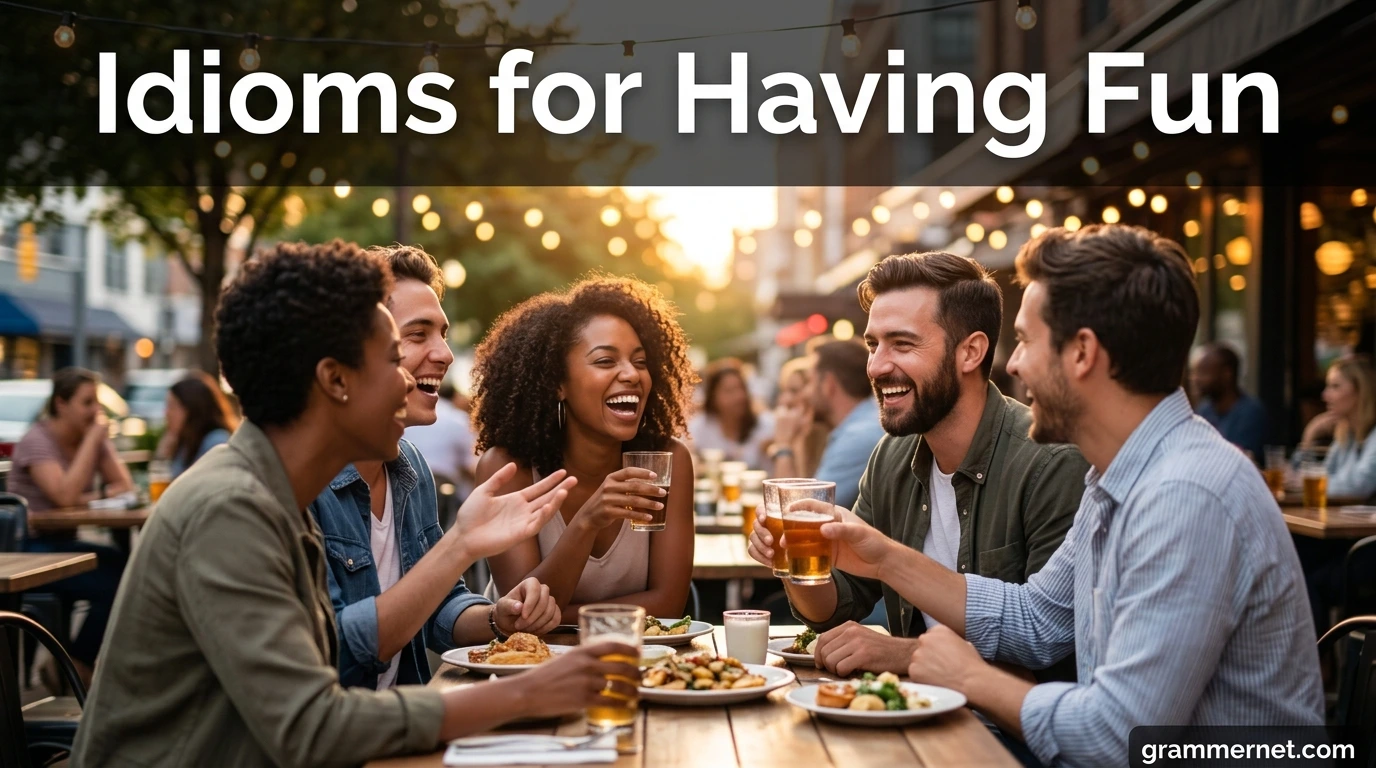
Having fun is one of the most natural parts of life, and English has many colorful ways to talk about it. Instead of saying “I enjoyed myself,” native speakers often use lively idioms that make conversations sound warmer, more expressive, and more natural.
Learning idioms for having fun helps English learners describe happy moments, social events, hobbies, and free time in a way that feels fluent and relatable.
These expressions are useful in everyday conversation, social media, storytelling, and even workplace small talk. When you know them well, you can talk about joyful experiences with confidence and personality.
What Are Idioms for Having Fun?
Idioms are phrases whose meanings are not literal. Idioms for having fun are expressions used to describe enjoyment, excitement, laughter, entertainment, and playful moments in creative language.
For example, when someone says “have a blast,” they do not mean an explosion. They mean they had a great time.
These idioms are popular because fun is a universal experience. People use them when talking about parties, trips, games, friendships, celebrations, or anything enjoyable. Learning them helps you understand everyday English and makes your speaking sound more natural.
Why Learning Fun Idioms Matters
Learning idioms for having fun helps you:
- express joy and excitement more naturally
- understand native speakers in movies, songs, and conversations
- make your English sound more lively and friendly
- describe happy experiences with emotion and style
- improve confidence in speaking and writing
These idioms are especially useful for students, travelers, social conversations, blogs, captions, and storytelling.
Common Idioms for Having Fun
1. Have a Blast
Meaning: To have a very enjoyable time.
Example: We had a blast at the party last night.
Alternative expressions: have a great time, enjoy yourself, have lots of fun
Typical use cases: parties, trips, events, celebrations
Fun fact / origin: The word “blast” usually means a strong explosion, but in this idiom it means a burst of excitement or energy.
2. Paint the Town Red
Meaning: To go out and enjoy yourself in a lively way, often at night.
Example: They painted the town red after graduation.
Alternative expressions: go out and celebrate, party hard
Typical use cases: celebrations, nightlife, special occasions
Fun fact / origin: This phrase likely came from an old story about rowdy celebration and wild behavior in town.
3. Live It Up
Meaning: To enjoy life in an exciting and carefree way.
Example: We lived it up during our vacation in Dubai.
Alternative expressions: enjoy fully, make the most of it, celebrate life
Typical use cases: vacations, special events, youth culture
Tone: Often used for big, exciting, or stylish experiences.
4. Have the Time of Your Life
Meaning: To enjoy yourself very much.
Example: She had the time of her life at the concert.
Alternative expressions: love every moment, enjoy deeply
Typical use cases: weddings, trips, concerts, memorable events
Fun fact / origin: This idiom became widely known through songs and popular culture.
5. Blow Off Steam
Meaning: To release stress by doing something fun or active.
Example: After exams, we went out to blow off steam.
Alternative expressions: relax, unwind, let off stress
Typical use cases: stress relief, sports, social activities
Why it matters: Fun is not always just entertainment; sometimes it is a way to recover emotionally.
6. Go Wild
Meaning: To act in an energetic, exciting, or uncontrolled way while having fun.
Example: The crowd went wild when the band came on stage.
Alternative expressions: get excited, go crazy, cheer loudly
Typical use cases: concerts, sports, parties
Tone: Very lively and energetic.
7. Kick Back
Meaning: To relax and enjoy yourself.
Example: On weekends, I like to kick back with friends.
Alternative expressions: chill out, relax, unwind
Typical use cases: casual time, weekends, social hangouts
Fun fact / origin: The image is of leaning back comfortably and taking it easy.
8. Let Your Hair Down
Meaning: To relax and behave freely, especially at a social event.
Example: At the wedding, everyone let their hair down and danced all night.
Alternative expressions: relax, be yourself, have fun freely
Typical use cases: parties, celebrations, social events
Fun fact / origin: Historically, hair up was associated with formal behavior, so letting it down symbolized freedom.
9. Be a Barrel of Laughs
Meaning: To be very funny or entertaining.
Example: He’s a barrel of laughs at every family dinner.
Alternative expressions: funny person, entertaining person
Typical use cases: friendship, personality description
Tone: Usually used in a cheerful or playful way.
10. Crack Up
Meaning: To laugh a lot or to make someone laugh a lot.
Example: The comedian cracked everyone up.
Alternative expressions: make people laugh, burst out laughing
Typical use cases: jokes, comedy, friendly conversations
Fun fact / origin: The phrase gives the image of a person “breaking” into laughter.
11. A Laugh a Minute
Meaning: Very funny or entertaining.
Example: That movie was a laugh a minute.
Alternative expressions: hilarious, extremely funny
Typical use cases: movies, shows, events
Tone: Common in casual entertainment talk.
12. Have a Whale of a Time
Meaning: To have a wonderful and enjoyable time.
Example: The children had a whale of a time at the park.
Alternative expressions: have a great time, enjoy fully
Typical use cases: family outings, holidays, school trips
Fun fact / origin: A whale is large and impressive, so the phrase suggests a big, memorable amount of fun.
13. Fun and Games
Meaning: Amusing or enjoyable activities; sometimes used ironically to mean things are not serious.
Example: The trip was all fun and games until it started raining.
Alternative expressions: playful activities, entertainment
Typical use cases: casual conversation, storytelling, irony
Tone: Can be lighthearted or sarcastic depending on context.
14. Make Merry
Meaning: To celebrate and enjoy yourself in a cheerful way.
Example: The village made merry during the festival.
Alternative expressions: celebrate, enjoy festively
Typical use cases: holidays, festivals, traditions
Fun fact / origin: This is an older, more literary phrase often used in festive or cultural writing.
15. On a Roll
Meaning: To be doing very well and enjoying repeated success or good luck.
Example: We were on a roll all evening at the game night.
Alternative expressions: doing great, having a lucky streak
Typical use cases: games, sports, projects, good mood
Tone: While not strictly about fun, it often appears in fun, energetic contexts.
Idioms for Having Fun Grouped by Context
Grouping idioms by context makes them easier to remember and use naturally.
For Parties and Celebrations
- paint the town red
- live it up
- make merry
- have a blast
Example: After graduation, we painted the town red and had a blast.
For Relaxing and Enjoying Free Time
- kick back
- let your hair down
- blow off steam
- have a whale of a time
Example: We kicked back, let our hair down, and had a whale of a time.
For Laughter and Entertainment
- crack up
- a laugh a minute
- barrel of laughs
Example: The comedian was a barrel of laughs and cracked everyone up.
For Energetic or Wild Fun
- go wild
- fun and games
- on a roll
Example: The crowd went wild, and the night was pure fun and games.
Tips for Using Fun Idioms Effectively
Use idioms that match the situation. A party may call for “paint the town red,” while a quiet evening fits “kick back.”
Choose the right tone. Some idioms are playful, while others sound more literary or informal.
Practice them in full sentences. This helps them feel natural in speaking and writing.
Use them sparingly. One strong idiom is often better than several in one sentence.
Common Mistakes to Avoid
Do not interpret idioms literally. For example, “have a blast” does not mean an explosion.
Avoid using very informal idioms in formal essays or business reports.
Do not mix idioms incorrectly. “Paint the town blue” is not a standard expression.
Be careful with tone. Some idioms like “fun and games” can be ironic.
Fun Facts About Fun Idioms
Many idioms for having fun come from everyday images of movement, energy, and celebration.
For example:
- “paint the town red” suggests wild celebration
- “let your hair down” symbolizes freedom
- “crack up” reflects laughter breaking through
- “have a whale of a time” uses a large sea animal to suggest big, memorable enjoyment
These vivid images make the idioms easy to remember and fun to use.
Interactive Practice Activities
Easy Level: Fill in the Blanks
Complete the sentences with the correct idiom.
- We had a _______ at the beach party.
- The comedian really _______ everyone up.
- We went out to paint the town _______.
Answers:
- blast
- cracked
- red
Medium Level: Match the Idiom to the Meaning
Match each idiom with the correct meaning.
- Kick back
- Have the time of your life
- Blow off steam
A. Relax and enjoy yourself B. Release stress with a fun activity C. Enjoy something extremely much
Answers: 1-A 2-C 3-B
Advanced Level: Choose the Best Idiom
Choose the best idiom for each situation.
- A student relaxes after exams by going out with friends.
- A family has an unforgettable holiday full of joy.
- A concert audience reacts with huge excitement.
Answers:
- Blow off steam
- Have the time of your life
- Go wild
Bonus Challenge: Write Your Own Sentences
Use these idioms in your own writing or speaking:
- let your hair down
- a laugh a minute
- live it up
- have a whale of a time
Sample answers:
- At the festival, everyone let their hair down.
- The movie was a laugh a minute.
- They lived it up during summer break.
- The kids had a whale of a time at the zoo.
Suggestions for Visuals and Infographics
A strong visual guide for idioms for having fun could include:
- a party-themed infographic with idioms grouped by mood
- cartoon illustrations for each phrase
- a “fun level” chart showing light fun, big fun, and wild fun
- comparison boxes for literal meaning vs idiomatic meaning
- emoji-based flashcards for quick review
These visuals make idioms easier to remember and more enjoyable to learn.
Best Ways to Practice These Idioms
Read short dialogues, captions, and social posts where people talk about fun events. Write one sentence a day using a new idiom. Practice speaking them in conversations with friends or classmates. Group them by situation, such as parties, relaxing, laughing, or celebrating, to improve memory.
The more often you use them, the more natural they will feel.
FAQs
1. What are idioms for having fun?
They are expressions used to describe enjoyment, excitement, laughter, celebration, and playful moments.
2. Why should English learners study these idioms?
They are common in real conversations and help you sound natural and expressive.
3. Which idiom is the most common?
“Have a blast,” “kick back,” and “have the time of your life” are among the most common.
4. Are these idioms formal or informal?
Most are informal, though a few like “make merry” can appear in more literary or festive writing.
5. Can I use these idioms in writing?
Yes, especially in creative writing, storytelling, social media, and casual messages.
6. How can I remember them easily?
Learn them with examples, group them by context, and practice them in real-life situations.
Conclusion
Learning idioms for having fun is a great way to make your English more lively, natural, and expressive. These phrases help you talk about joy, laughter, celebration, and relaxation in a way that feels warm and human. They are useful in everyday conversations, stories, captions, and social situations.
The key to mastering them is simple: understand the meaning, notice the context, and use them often. Start with the most common ones, practice in full sentences, and build your confidence over time. With regular use, these idioms will help you describe fun moments with style and ease.
