
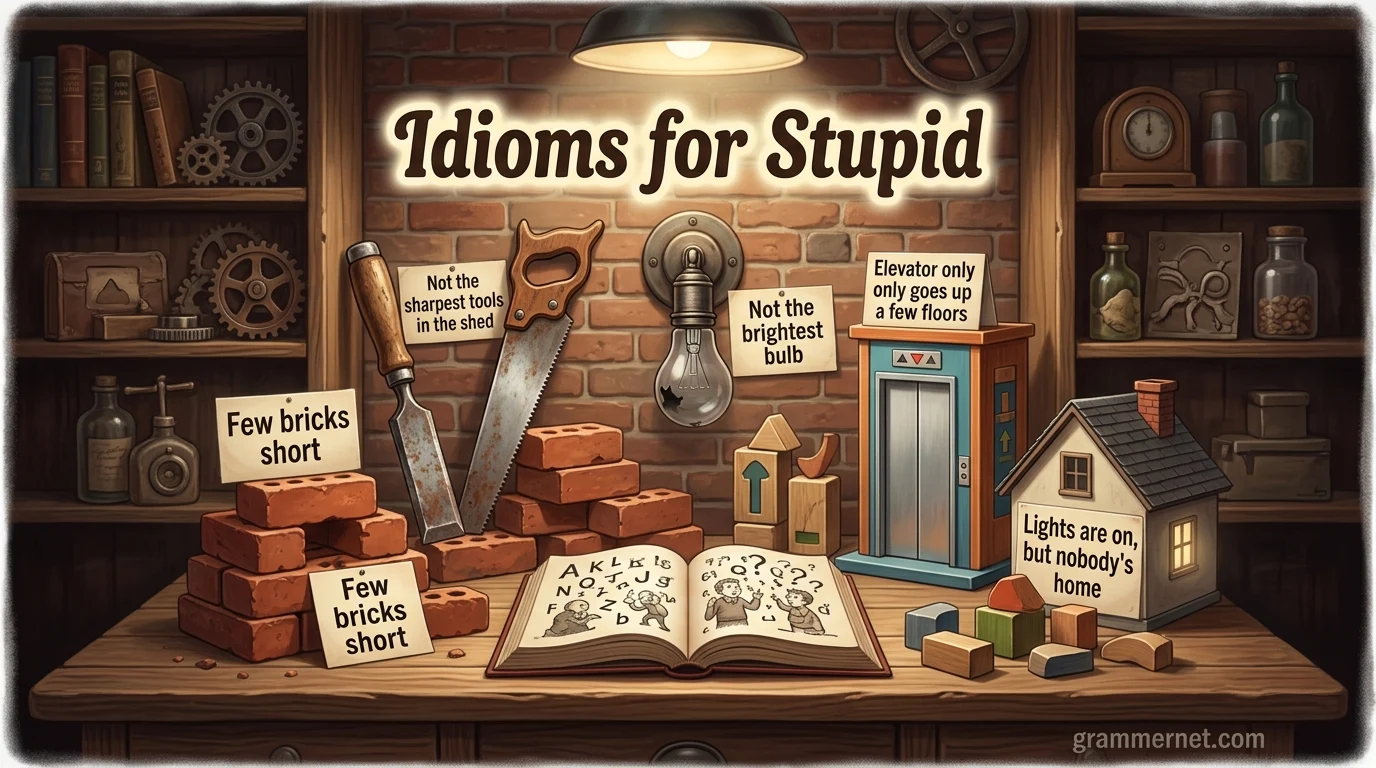
Language gives us many ways to describe foolish behavior, poor judgment, or silly decisions without using the same direct word every time. Learning idioms for stupid helps English learners understand everyday speech, movies, jokes, and workplace conversation more clearly.
It also helps you choose stronger, more natural expressions when you need to describe someone’s actions carefully.
These idioms can be useful in real life, but they must be used with caution because many of them sound rude, insulting, or sarcastic. In this guide, you will learn the most common expressions, their meanings, examples, origins, and the best situations to use them.
What Are Idioms for “Stupid”?
Idioms are phrases whose meanings are not literal. Idioms for stupid are expressions used to describe foolishness, lack of sense, poor decisions, or silly behavior.
For example, if someone says, “He was born yesterday,” they do not mean the person is an infant. They mean the person is not easily fooled and is not as naive as they seem.
These idioms are common in informal English. Some are humorous, some are harsh, and some are playful. Because of that, it is important to learn not only the meaning but also the tone.
Why Learning These Idioms Matters
Knowing idioms for foolishness is useful for several reasons.
You will understand native speakers better in conversations, TV shows, and online content. You will also recognize when someone is joking, insulting, or being sarcastic. In addition, these idioms help you express frustration or criticism more naturally in English. Finally, learning them improves your vocabulary range, which makes your speaking and writing more flexible.
Common Idioms for Stupid With Meaning, Examples, and Use Cases
1. Not the Sharpest Tool in the Shed
Meaning: Not very intelligent or quick to understand.
Example: He forgot his own birthday, so people say he is not the sharpest tool in the shed.
Alternative expressions: not very smart, a little slow, not quick to catch on
Typical use cases: casual conversation, jokes, mild insults
Fun fact / origin: This idiom compares a person to a tool. A sharp tool works well, so “not the sharpest” suggests someone is less effective or less clever than others.
2. A Few Sandwiches Short of a Picnic
Meaning: Mentally not very bright or not fully sensible.
Example: His strange plan made everyone think he was a few sandwiches short of a picnic.
Alternative expressions: not fully sensible, a bit odd, lacking judgment
Typical use cases: humorous criticism, informal speech
Fun fact / origin: This phrase uses the image of a picnic basket that is missing some sandwiches, suggesting something is incomplete.
3. Not Playing With a Full Deck
Meaning: Not mentally normal or not thinking clearly.
Example: He believed that wild rumor, so people joked that he was not playing with a full deck.
Alternative expressions: not thinking straight, mentally confused
Typical use cases: sarcastic remarks, informal criticism
Fun fact / origin: This idiom comes from card games. A full deck means all the cards are there; if it is incomplete, something is missing.
4. Born Yesterday
Meaning: Naive, gullible, or easily fooled.
Example: Don’t try to trick me. I wasn’t born yesterday.
Alternative expressions: not naive, not easily fooled, experienced
Typical use cases: defending yourself, sarcastic replies, casual speech
Fun fact / origin: This idiom suggests that a person is not new to the world and has enough experience to understand what is happening.
5. Thick as Two Short Planks
Meaning: Very stupid or very slow to understand.
Example: He could not solve the simplest problem. People said he was thick as two short planks.
Alternative expressions: very foolish, extremely slow, not intelligent
Typical use cases: strong insult, rude humor
Important note: This idiom is harsh and offensive. Use it carefully, or better yet, avoid using it directly toward people.
6. A Brick Short of a Load
Meaning: Not smart or missing common sense.
Example: If he thinks that plan will work, he must be a brick short of a load.
Alternative expressions: silly, not sensible, lacking judgment
Typical use cases: sarcastic speech, informal criticism
Fun fact / origin: This idiom uses the image of a load of bricks missing one piece, suggesting something is incomplete.
7. Two Sandwiches Short of a Picnic
Meaning: Very foolish, odd, or not fully sensible.
Example: His idea sounded like he was two sandwiches short of a picnic.
Alternative expressions: crazy idea, foolish behavior
Typical use cases: humorous insults, casual conversation
Note: This is a playful version of similar “short of a picnic” idioms.
8. Not the Full Shilling
Meaning: Not fully sensible or not mentally sharp.
Example: He keeps making the same mistake, so some people say he is not the full shilling.
Alternative expressions: not very bright, not all there
Typical use cases: British English, informal speech
Fun fact / origin: This comes from old British currency. A full shilling was complete value; if something was “not the full shilling,” it was missing something.
9. Not All There
Meaning: Not mentally focused, confused, or slightly foolish.
Example: He seemed distracted and not all there during the meeting.
Alternative expressions: distracted, confused, absent-minded
Typical use cases: casual conversation, describing confusion
Important note: This can sound rude depending on how it is used.
10. Can’t Tell Left from Right
Meaning: Very confused or unable to make a simple decision.
Example: She was so nervous that she couldn’t tell left from right.
Alternative expressions: completely confused, lost, unsure
Typical use cases: stress, confusion, mistakes
11. A Bit Dim
Meaning: Not very smart or not quick to understand.
Example: He is a bit dim when it comes to directions.
Alternative expressions: slow to understand, not very bright
Typical use cases: mild criticism, British English, casual talk
Fun fact / origin: “Dim” suggests low light, so it can metaphorically mean low intelligence or dull thinking.
12. Goosey / Silly Goose
Meaning: A playful way to call someone foolish or silly.
Example: You silly goose, you left your phone at home again.
Alternative expressions: silly, playful, goofy
Typical use cases: friendly teasing, children, informal affection
Tone note: This is usually not insulting. It is often affectionate and humorous.
13. Fool Around
Meaning: To act silly, waste time, or behave irresponsibly.
Example: Stop fooling around and finish your homework.
Alternative expressions: mess around, waste time, act irresponsibly
Typical use cases: parents, teachers, casual correction
Fun fact / origin: This phrase is broader than “stupid.” It often refers to careless or childish behavior.
14. Use Your Head
Meaning: Think carefully; use common sense.
Example: Use your head before making such a risky choice.
Alternative expressions: think smartly, be sensible
Typical use cases: advice, correction, workplace, parenting
Why it matters: This is not an insult by itself, but it is often used when someone makes a silly decision.
15. A Wet Blanket
Meaning: Someone who spoils fun or behaves in a dull, negative way.
Example: Don’t be a wet blanket at the party.
Alternative expressions: killjoy, spoil-sport, gloomy person
Typical use cases: social events, group fun
Fun fact / origin: A wet blanket puts out fire or excitement, so the phrase suggests someone who kills the mood.
Idioms for Stupid Grouped by Context
Grouping idioms by context helps you choose the right phrase and avoid sounding too harsh.
For Naive or Gullible People
- born yesterday
- not the sharpest tool in the shed
- a bit dim
Example: Don’t think I was born yesterday. I’m not that naive.
For Confused or Mentally Off-Balance Behavior
- not all there
- not playing with a full deck
- a few sandwiches short of a picnic
Example: He seemed not all there when he answered the question.
For Silliness or Bad Judgment
- fool around
- use your head
- can’t tell left from right
Example: Stop fooling around and use your head.
For Light, Friendly Teasing
- silly goose
- a wet blanket
- a bit dim
Example: You silly goose, you forgot the keys again.
Tips for Using These Idioms Effectively
Use these idioms carefully because many of them are rude or insulting. Choose playful expressions only when the relationship is friendly. If you are writing professionally, avoid direct insults altogether. When speaking, think about tone, context, and your listener’s feelings. Some idioms are better for jokes or fiction than for real-life criticism.
Common Mistakes to Avoid
Do not use rude idioms with strangers, teachers, managers, or clients. Do not translate them literally. The meaning is usually figurative. Do not confuse playful idioms with offensive ones. “Silly goose” is friendly, but “thick as two short planks” is harsh. Do not overuse insulting language in your English. It can make you sound aggressive or unkind. Do not assume every idiom means the same thing. Some mean foolish, some mean naive, and some mean confused.
Fun Facts About These Idioms
Many idioms for stupidity come from older forms of English humor. People often used food, tools, money, and card games as symbols for intelligence.
For example, “not the sharpest tool in the shed” compares a person to a tool that does not work well. “Not playing with a full deck” comes from card games, where an incomplete deck means something is missing. “Born yesterday” reflects the idea of experience versus innocence. “Silly goose” is often softer and more affectionate than the others.
These images make the expressions memorable, but they also show how English often uses everyday objects to describe people’s behavior.
Interactive Practice Activities
Easy Level: Fill in the Blanks
Complete the sentences with the correct idiom.
- Don’t try to fool me. I wasn’t _______ yesterday.
- He forgot his own keys again. He is such a silly _______.
- She could not understand the simplest question. People said she was not the sharpest _______ in the shed.
Answers:
- born
- goose
- tool
Medium Level: Match the Idiom to the Meaning
Match each idiom with its meaning.
- Not all there
- Fool around
- Use your head
A. Think carefully B. Behave silly or waste time C. Confused or not mentally focused
Answers: 1-C 2-B 3-A
Advanced Level: Choose the Best Idiom
Choose the best idiom for each situation.
- A friend keeps making careless mistakes and ignoring simple advice.
- Someone is joking in a friendly way because you left your bag at home again.
- A person believes an obvious lie and is very gullible.
Answers:
- Not the sharpest tool in the shed
- Silly goose
- Born yesterday
Bonus Challenge: Write Your Own Sentences
Try using these idioms in your own writing or speaking:
- a few sandwiches short of a picnic
- not playing with a full deck
- a wet blanket
- can’t tell left from right
Sample answers:
- His strange plan made people think he was a few sandwiches short of a picnic.
- She looked like she was not playing with a full deck after hearing the news.
- Don’t be a wet blanket at the celebration.
- I was so nervous I couldn’t tell left from right.
Suggestions for Visuals and Infographics
A good visual guide for these idioms could include:
- a “tone meter” showing friendly, neutral, and insulting expressions
- icons for each idiom, such as a toolbox, deck of cards, or sandwich
- a comparison chart between playful and rude expressions
- a “when to use / when not to use” infographic
- cartoon illustrations to show the figurative meaning
These visuals help learners remember not only the meaning but also the emotional tone.
Best Ways to Practice These Idioms
The best way to learn idioms for stupid is to study them in context.
Read dialogues, jokes, and short stories where people speak informally. Write your own example sentences with different levels of tone. Practice identifying whether an idiom is playful, rude, or neutral. Use them carefully in conversation only when the situation is appropriate. If you are unsure, choose a softer phrase like “a bit silly” or “not thinking clearly.”
FAQs
1. What are idioms for stupid?
They are expressions used to describe foolish, naive, or poorly judged behavior in a figurative way.
2. Are these idioms offensive?
Many of them are rude or insulting. Some are playful, but others should be used very carefully.
3. What is the mildest idiom in this list?
“Silly goose” is usually the mildest and most affectionate expression.
4. Can I use these idioms in professional English?
It is best to avoid insulting idioms in professional settings. Use neutral alternatives instead.
5. Why do English speakers use idioms like these?
They make speech more vivid, emotional, and often humorous.
6. How can I remember them better?
Learn them by tone, context, and example sentence, not just by word-for-word meaning.
Conclusion
Learning idioms for stupid can help you understand everyday English more deeply, but it also teaches an important lesson about tone and respect. Some of these expressions are funny and playful, while others are harsh and offensive. That means context matters just as much as meaning.
The smartest way to use these idioms is to recognize them when you hear them, practice them carefully, and choose softer language when needed. Keep building your vocabulary, keep noticing the tone, and use these expressions wisely in real conversations. With practice, your English will become more natural, flexible, and emotionally accurate.
