
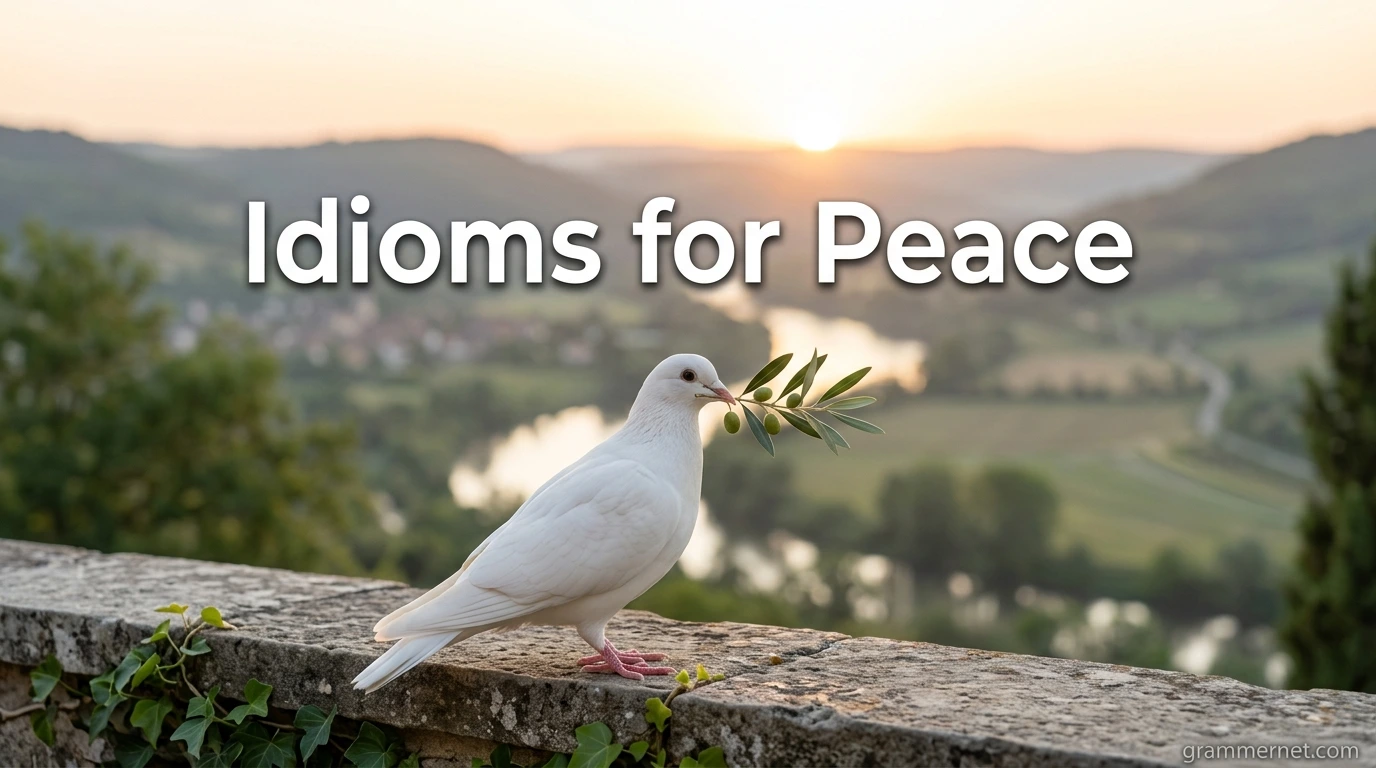
Idioms for peace help English learners express calmness, harmony, and emotional balance in a more natural and meaningful way. Instead of simply saying “peaceful” or “calm,” idioms allow you to describe situations, relationships, and emotions with deeper expression. These phrases are widely used in conversations, literature, speeches, and even professional communication.
Learning idioms for peace is not only useful for improving your English skills but also for expressing positive emotions and conflict resolution more effectively. Whether you are talking about world peace, a quiet home, or a calm mind, these idioms help you communicate with clarity and emotional depth.
What Are Idioms for Peace?
Idioms for peace are figurative expressions that describe harmony, calmness, reconciliation, or the absence of conflict. They often use symbolic language to express emotional or social peace.
For example, instead of saying “everything is calm,” you might say “all is quiet on the western front,” which adds a creative and expressive tone.
Common Idioms for Peace
1. All Is Calm
Meaning: Everything is peaceful, quiet, and stable.
Example: “After the storm passed, all was calm in the village.”
Alternative Expressions:
- Peaceful
- Quiet
- Stable
Typical Use Cases:
- Nature descriptions
- Emotional situations
- After conflict resolution
Fun Fact: This phrase is often used in literature and poetry to describe peace after chaos.
2. Make Peace
Meaning: To end a conflict and restore harmony.
Example: “They decided to make peace after years of disagreement.”
Alternative Expressions:
- Reconcile
- Settle differences
- Patch things up
Typical Use Cases:
- Relationships
- Family conflicts
- International diplomacy
3. Peace of Mind
Meaning: A feeling of mental calmness and absence of worry.
Example: “Saving money gives me peace of mind.”
Alternative Expressions:
- Mental calm
- Emotional stability
- Inner peace
Typical Use Cases:
- Personal life
- Financial decisions
- Health discussions
4. Live in Harmony
Meaning: To live peacefully without conflict with others.
Example: “The community lives in harmony despite differences.”
Alternative Expressions:
- Get along well
- Peaceful coexistence
- Unity
Typical Use Cases:
- Social groups
- Communities
- Workplace environments
5. Turn Over a New Leaf
Meaning: To start fresh and make positive changes, often after conflict.
Example: “He turned over a new leaf and stopped arguing with others.”
Alternative Expressions:
- Start fresh
- Begin again
- Change for the better
Fun Fact / Origin: The “leaf” refers to a page in a book, symbolizing a new chapter in life.
6. Bury the Hatchet
Meaning: To end a disagreement and become friends again.
Example: “They finally buried the hatchet after years of rivalry.”
Alternative Expressions:
- Make up
- Reconcile
- Forgive and forget
Fun Fact / Origin: This comes from Native American tradition where burying a hatchet symbolized ending war.
7. Calm Before the Storm
Meaning: A peaceful period before a difficult or chaotic situation.
Example: “The classroom was quiet—the calm before the storm before the exam results.”
Alternative Expressions:
- Temporary peace
- Brief calm period
Typical Use Cases:
- Weather
- Emotional tension
- Events
8. Live and Let Live
Meaning: Allow others to live their lives peacefully without interference.
Example: “I follow a live and let live attitude.”
Alternative Expressions:
- Be tolerant
- Respect differences
- Mind your own business (informal)
Typical Use Cases:
- Social philosophy
- Relationships
- Cultural understanding
9. Keep the Peace
Meaning: To maintain harmony and avoid conflict.
Example: “He tries to keep the peace in his family.”
Alternative Expressions:
- Maintain harmony
- Avoid conflict
- Stay neutral
Typical Use Cases:
- Family situations
- Leadership roles
- Mediation
10. At Peace
Meaning: Feeling calm, content, and free from stress or worry.
Example: “She felt at peace after making her decision.”
Alternative Expressions:
- Calm
- Relaxed
- Emotionally settled
Typical Use Cases:
- Emotional well-being
- Life decisions
- Reflection
Idioms for Peace by Context
Personal Peace and Emotion
- Peace of mind
- At peace
- Turn over a new leaf
Social Harmony
- Live in harmony
- Live and let live
- Keep the peace
Conflict Resolution
- Make peace
- Bury the hatchet
- Settle differences
Situational Calmness
- All is calm
- Calm before the storm
Tips for Using Idioms for Peace
1. Use them in emotional or reflective contexts
Idioms like “peace of mind” work best when discussing feelings.
2. Choose the right tone
Some idioms are formal (“make peace”), while others are informal (“bury the hatchet”).
3. Don’t overuse them
Use one or two idioms naturally in conversation instead of stacking many.
4. Practice with real-life situations
Describe moments of calm, forgiveness, or resolution using these idioms.
5. Watch native usage
Movies, speeches, and interviews often use peace-related idioms.
Common Mistakes to Avoid
Misinterpreting literal meaning
“Bury the hatchet” is not about actual digging—it means forgiving someone.
Using wrong context
“Peace of mind” is emotional, not physical calmness like weather.
Mixing formal and informal idioms
Avoid using very casual idioms in formal writing or speeches.
Overusing peace idioms in academic writing
Use them sparingly in essays unless relevant.
Interactive Practice Section
Exercise 1: Fill in the blanks (Easy)
- After the argument, they decided to ______ peace.
- She feels at ______ after finishing her exams.
- The village is very calm—all is ______.
Answers:
- make
- peace
- calm
Exercise 2: Match the idiom (Medium)
IdiomMeaningBury the hatchetA. Stay calm and relaxedLive in harmonyB. End a conflictPeace of mindC. Emotional calmness
Answers:
- Bury the hatchet → B
- Live in harmony → A
- Peace of mind → C
Exercise 3: Choose the correct idiom (Advanced)
- “They stopped fighting and became friends again.”
- “I feel emotionally calm and worry-free.”
- “Everyone in the community gets along well.”
Answers:
- Bury the hatchet
- Peace of mind
- Live in harmony
Visual Learning Suggestions
To better understand idioms for peace, use visuals such as:
- A dove for “peace”
- A calm ocean for “all is calm”
- A broken weapon being buried for “bury the hatchet”
- A heart and brain for “peace of mind”
- A handshake for “make peace”
Why Idioms for Peace Matter
Idioms for peace are important because they help express emotional balance, forgiveness, and harmony in a natural and meaningful way. They are widely used in everyday conversation, storytelling, and even professional communication.
Using these idioms improves your fluency and allows you to talk about emotions and relationships in a more expressive way.
FAQs
What are idioms for peace?
They are expressions used to describe calmness, harmony, and emotional or social balance.
Are idioms for peace formal or informal?
Some are formal (make peace), while others are informal (bury the hatchet).
Where can I use peace idioms?
You can use them in conversations, writing, speeches, and storytelling.
What is the most common peace idiom?
“Peace of mind” and “make peace” are very commonly used.
How can I learn peace idioms quickly?
Practice them in real-life situations and use visual associations.
Conclusion
Idioms for peace are powerful expressions that help you communicate calmness, harmony, and emotional balance in English. Instead of simply saying “peaceful,” you can use phrases like “bury the hatchet,” “live in harmony,” or “peace of mind” to make your language more natural and expressive.
By practicing these idioms in context and using them in daily conversation, you can improve both your fluency and emotional expression in English.
