25+ Idioms for Marriage 2026

Idioms for Marriage

Marriage is one of the most important topics in everyday English, literature, movies, and conversations. People do not always speak about it in a direct way; instead, they often use colorful idioms for marriage to express love, commitment, celebration, and sometimes even challenges in married life. Learning these idioms helps English learners understand native speakers … Read more


25+ Idioms for Memory 2026

Idioms for Memory

Learning idioms for memory is a great way to improve your English vocabulary and communication skills. Memory-related idioms are commonly used in conversations, storytelling, education, workplaces, and daily life to describe remembering, forgetting, learning, and recalling information. These expressions make speech more colorful, emotional, and natural. For English learners, students, and professionals, understanding idioms about … Read more

25+ Idioms for Music 2026

Idioms for Music

Idioms for music are an enjoyable and practical way to improve your English because music is something almost everyone understands emotionally. These expressions help learners talk about sound, rhythm, performance, teamwork, success, and even life in a more natural and creative way. Whether you are a student, a professional, or simply someone who loves language, … Read more

25+ Idioms for Never Going to Happen 2026

Idioms for Never Going to Happen

Idioms for “never going to happen” are useful because English speakers often express impossibility, disbelief, or strong refusal with humor and style instead of plain words. These idioms help you understand native conversations, movies, workplace banter, and even sarcastic comments more easily. They also make your own English sound more natural, confident, and emotionally expressive … Read more

25+ Idioms for Teaching 2026

Idioms for Teaching

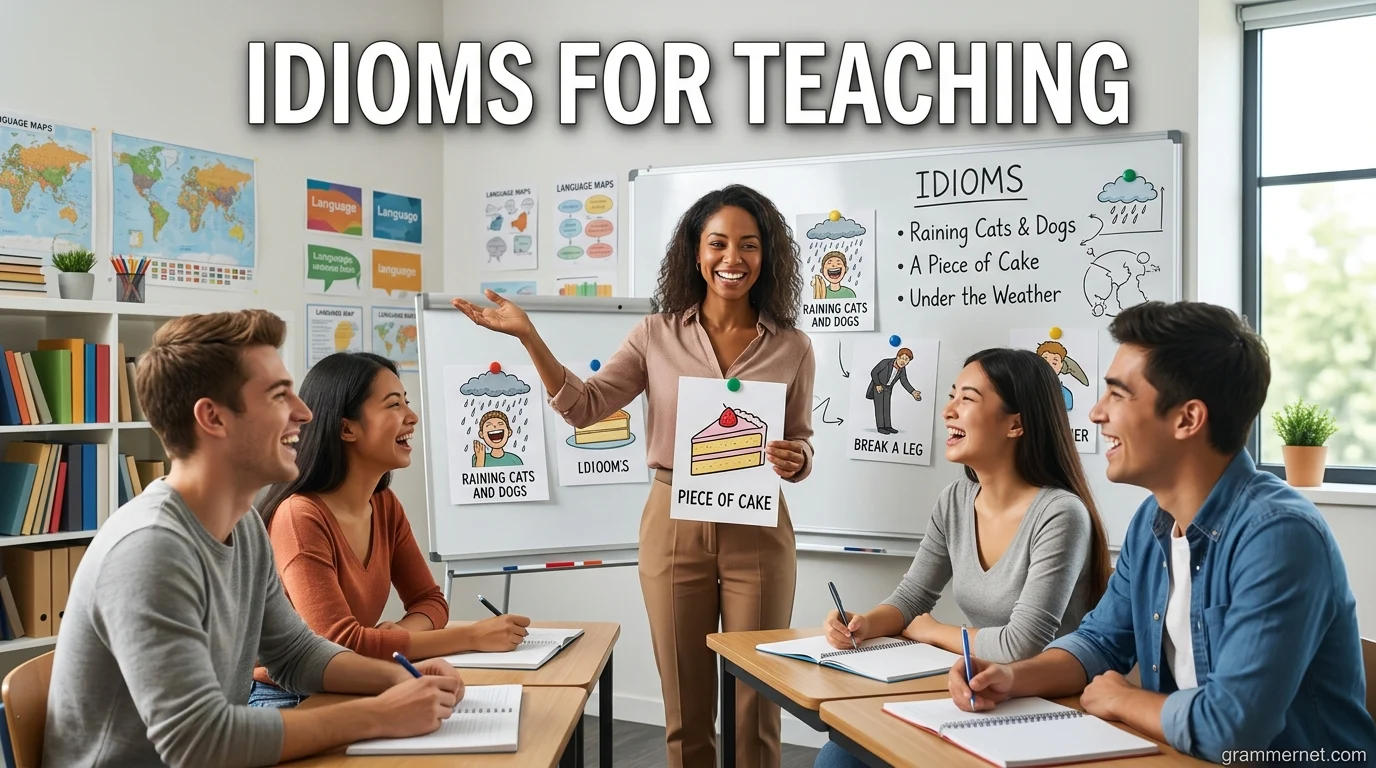
Idioms for teaching are powerful expressions that help educators, students, and professionals talk about learning in a more natural and engaging way. Teaching is not just about explaining lessons—it is about inspiring understanding, building confidence, and making ideas stick. Idioms add color and clarity to classroom language, making communication more effective and memorable. For English … Read more

25+ Idioms for Old 2026

Idioms for Old

Idioms for old are widely used expressions in English that describe age, experience, time, and the feeling of being “old” in both literal and emotional ways. These idioms are important because they help English learners talk about aging, wisdom, traditions, and even outdated things in a natural and culturally rich way. Instead of simply saying … Read more

25+ Idioms for Peace 2026

Idioms for Peace

Idioms for peace help English learners express calmness, harmony, and emotional balance in a more natural and meaningful way. Instead of simply saying “peaceful” or “calm,” idioms allow you to describe situations, relationships, and emotions with deeper expression. These phrases are widely used in conversations, literature, speeches, and even professional communication. Learning idioms for peace … Read more

25+ Idioms for Quick 2026

Idioms for Quick

Idioms for quick are essential for English learners who want to speak more naturally and express ideas about speed, efficiency, and fast actions. Instead of simply saying “fast” or “quickly,” these idioms allow you to sound more fluent, expressive, and native-like. They are commonly used in conversations, business communication, exams, and everyday storytelling. Learning idioms … Read more

25+ Idioms for Reading 2026

Idioms for Reading

Reading is one of the most powerful skills in language learning, but native speakers often describe reading experiences in creative and idiomatic ways. Instead of simply saying “I read a lot” or “I understand the book,” English speakers use expressive phrases that make communication richer and more natural. Learning idioms for reading helps English learners … Read more

25+ Idioms for Sadness 2026

Idioms for Sadness

Sadness is a natural human emotion, and learning idioms for sadness helps English learners express emotions in a more vivid, natural, and fluent way. Native English speakers often use idioms instead of direct words like “sad” or “unhappy,” making conversations richer and more expressive. Understanding these emotional expressions improves speaking, writing, listening, and reading skills … Read more