
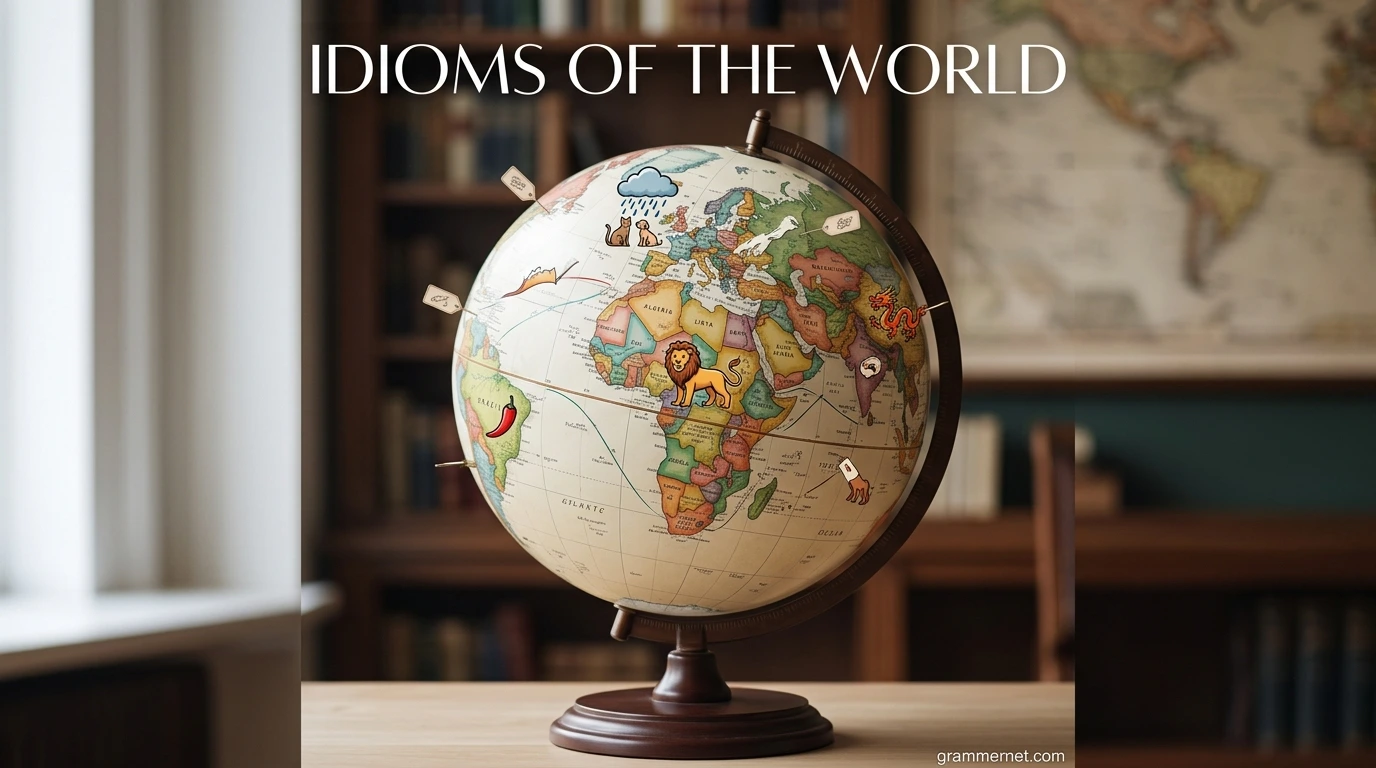
Language is more than words—it’s culture, history, and emotion. Learning idioms of the world allows English learners, students, and professionals to understand how people express ideas creatively across cultures.
These expressions add color, humor, and depth to communication. By mastering global idioms, you not only improve your English fluency but also gain cultural awareness and confidence in real-life conversations, whether in travel, business, or social settings.
What Are Idioms of the World?
Idioms of the world are expressions used in different languages that have meanings beyond their literal translation. While some idioms exist only in specific cultures, others have similar meanings across languages but use different imagery.
For example:
- English: “Break the ice”
- Spanish: “Romper el hielo” Both mean to start a conversation in a friendly way.
Why Learning Global Idioms Matters
Understanding idioms of the world helps you:
- communicate more naturally in English and other languages
- understand movies, books, and conversations better
- connect with people from different cultures
- avoid misunderstandings in international settings
- enhance professional communication skills
Popular Idioms of the World (With Meanings & Examples)
1. Break the Ice (English)
Meaning: Start a conversation in a social situation.
Example: He told a joke to break the ice at the meeting.
Alternative expressions: start a conversation, ease tension
Use cases: meetings, first introductions, networking
Fun fact: Originates from ships breaking ice to clear a path.
2. Spill the Beans (English)
Meaning: Reveal a secret.
Example: She spilled the beans about the surprise party.
Alternative expressions: reveal, disclose
Use cases: casual conversations, secrets
3. When Pigs Fly (English)
Meaning: Something that will never happen.
Example: He’ll clean his room when pigs fly.
Alternative expressions: never, impossible
Use cases: humor, exaggeration
4. Add Oil (Chinese – 加油)
Meaning: Encourage someone to keep going.
Example: You can do it—add oil!
Alternative expressions: keep going, don’t give up
Use cases: sports, exams, motivation
Fun fact: Comes from adding oil to lamps to keep them burning.
5. Not My Cup of Tea (British English)
Meaning: Something you don’t like.
Example: Horror movies are not my cup of tea.
Alternative expressions: not my preference, not for me
Use cases: opinions, preferences
6. Carry Coals to Newcastle (British English)
Meaning: Do something unnecessary.
Example: Bringing extra food was like carrying coals to Newcastle.
Alternative expressions: redundant effort
Fun fact: Newcastle was historically a coal-producing city.
7. The Apple Doesn’t Fall Far from the Tree (Global)
Meaning: Children are similar to their parents.
Example: She’s a great singer—like her mother. The apple doesn’t fall far from the tree.
Alternative expressions: like parent, like child
Use cases: family traits
8. Kill Two Birds with One Stone (Global)
Meaning: Achieve two goals with one action.
Example: I exercised and met friends—killed two birds with one stone.
Alternative expressions: be efficient, multitask
9. Have Butterflies in Your Stomach (English)
Meaning: Feel nervous.
Example: I had butterflies in my stomach before the exam.
Alternative expressions: feel anxious, nervous
10. Bite the Bullet (English)
Meaning: Face a difficult situation bravely.
Example: I had to bite the bullet and apologize.
Alternative expressions: face it, accept difficulty
Fun fact: Comes from soldiers biting bullets during surgery.
Idioms from Different Cultures
Asian Idioms
- “Add oil” (Chinese) – encouragement
- “Even monkeys fall from trees” (Japanese) – everyone makes mistakes
European Idioms
- “Break the ice” (English)
- “Carry coals to Newcastle” (British)
Universal Idioms
- “Kill two birds with one stone”
- “The apple doesn’t fall far from the tree”
Idioms of the World Grouped by Context
Work and Productivity
- bite the bullet
- kill two birds with one stone
Emotions and Feelings
- butterflies in your stomach
- break the ice
Opinions and Preferences
- not my cup of tea
Mistakes and Learning
- even monkeys fall from trees
Tips for Using Idioms of the World Effectively
Use idioms naturally, not excessively. Understand the cultural context before using them. Practice speaking them in real-life conversations. Choose idioms appropriate for formal or informal settings.
Common Mistakes to Avoid
Translating idioms word-for-word from your native language. Using idioms in inappropriate situations. Overusing idioms in professional writing. Misunderstanding their tone or meaning.
Interactive Practice Activities
Easy Level – Fill in the Blanks
- He told a joke to ______ the ice.
- I had ______ in my stomach before the test.
- She spilled the ______ about the surprise.
Answers:
- break
- butterflies
- beans
Medium Level – Match the Idiom
IdiomMeaningBite the bulletANot my cup of teaB
A. Face difficulty B. Not preferred
Answers: Bite the bullet → A Not my cup of tea → B
Advanced Level – Choose the Correct Idiom
- Something impossible
- Encourage someone
- Reveal a secret
Answers:
- When pigs fly
- Add oil
- Spill the beans
Bonus Activity
Write your own sentence using:
- break the ice
- kill two birds with one stone
- bite the bullet
Suggestions for Visuals and Infographics
- world map showing idioms by country
- comparison charts of idioms with similar meanings
- illustrations of literal vs figurative meanings
- flashcards for memorization
Extra Value: Cultural Insights Behind Idioms
Idioms reflect cultural values:
- English idioms often relate to history and daily life
- Asian idioms often include nature and philosophy
- European idioms reflect historical traditions
Understanding this helps you connect language with culture.
Best Ways to Practice Idioms of the World
Watch movies and listen to native speakers. Use idioms in daily conversations. Keep a vocabulary notebook. Practice with friends or language partners.
FAQs
1. What are idioms of the world?
They are expressions from different languages that have figurative meanings.
2. Why are idioms important in English learning?
They make your communication more natural and expressive.
3. Are idioms universal?
Some are shared across cultures, while others are unique.
4. Can I translate idioms directly?
No, idioms usually don’t make sense when translated word-for-word.
5. How many idioms should I learn?
Start with common ones and gradually expand your knowledge.
6. Are idioms used in professional settings?
Yes, but use them carefully and appropriately.
Conclusion
Learning idioms of the world opens the door to richer communication and deeper cultural understanding. These expressions make your language more vivid, engaging, and natural. By practicing regularly and using idioms in real-life situations, you can enhance both your fluency and confidence.
Keep exploring, stay curious, and make idioms a part of your daily language journey—because mastering them is a powerful step toward true language fluency.
