
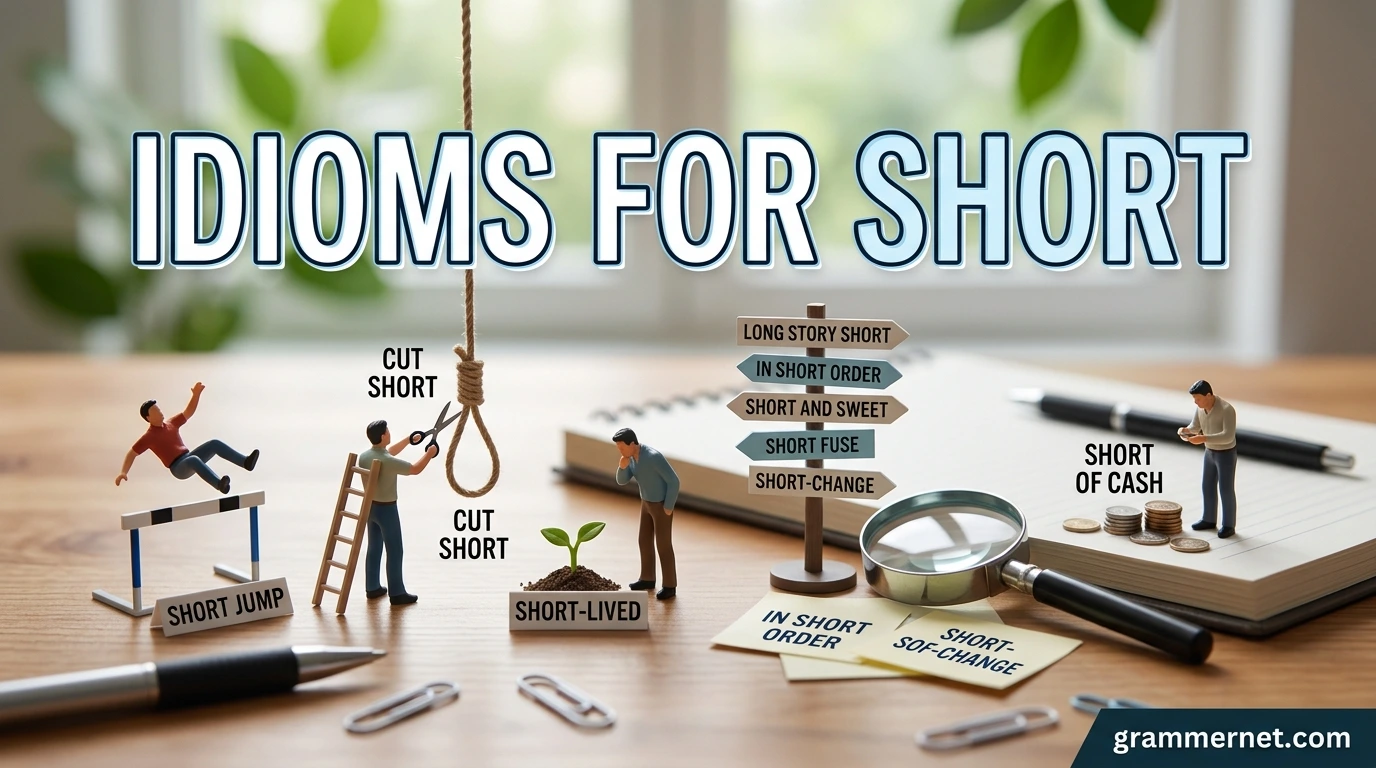
Learning idioms for short helps English learners sound more natural, expressive, and fluent in everyday conversations. These phrases are commonly used in schools, workplaces, books, movies, and casual discussions. Understanding idioms related to “short” can also improve listening and speaking skills while helping learners describe time, height, attention, patience, and resources more creatively. Whether you are a student, professional, or language enthusiast, mastering these idioms can make your communication more engaging and memorable.
What Are Idioms for Short?
Idioms for short are expressions that include the idea of being small, limited, brief, or lacking in length, time, patience, or quantity. These idioms often do not mean exactly what the words say literally. Instead, they carry figurative meanings used in daily English.
For example:
- “In short” does not mean physically small.
- “Cut short” means ending something early.
- “Short fuse” describes someone who gets angry quickly.
These expressions are extremely common in spoken and written English.
Common Idioms for Short
Short and Sweet
Meaning: Something brief but pleasant or effective.
Example: Her speech was short and sweet.
Alternative Expressions:
- Brief but meaningful
- Concise and effective
Typical Use Cases:
- Presentations
- Emails
- Conversations
Fun Fact: This phrase became popular because people often prefer quick and clear communication.
In Short
Meaning: To summarize something briefly.
Example: In short, the project was successful.
Alternative Expressions:
- To sum up
- In brief
- Basically
Typical Use Cases:
- Reports
- Essays
- Meetings
Cut Short
Meaning: To stop something earlier than expected.
Example: We had to cut our vacation short because of the storm.
Alternative Expressions:
- End early
- Interrupt
Typical Use Cases:
- Trips
- Events
- Phone calls
Short Fuse
Meaning: A quick temper.
Example: My boss has a short fuse when deadlines are missed.
Alternative Expressions:
- Hot-headed
- Easily angered
Typical Use Cases:
- Workplace discussions
- Personality descriptions
Origin: The phrase comes from explosives with a short fuse that explode quickly.
Fall Short
Meaning: To fail to reach expectations or goals.
Example: The team fell short of winning the championship.
Alternative Expressions:
- Fail to achieve
- Miss the target
Typical Use Cases:
- Sports
- Business
- Academic goals
Short on Time
Meaning: Having very little time available.
Example: I’m short on time, so let’s keep this meeting brief.
Alternative Expressions:
- Busy
- In a hurry
Typical Use Cases:
- Work meetings
- Daily schedules
Draw the Short Straw
Meaning: To be chosen for an unpleasant task.
Example: I drew the short straw and had to clean the office kitchen.
Alternative Expressions:
- Get unlucky
- Be assigned the worst task
Fun Fact: This idiom comes from drawing straws to make random decisions.
Come Up Short
Meaning: To fail to achieve enough.
Example: We came up short in our fundraising efforts.
Alternative Expressions:
- Not enough
- Fail to meet the goal
Short Notice
Meaning: Very little warning before something happens.
Example: Thank you for helping me on such short notice.
Alternative Expressions:
- Last minute
- Little warning
Typical Use Cases:
- Invitations
- Emergencies
- Work requests
A Short Leash
Meaning: Strict control over someone.
Example: The manager keeps new employees on a short leash.
Alternative Expressions:
- Tight control
- Strict supervision
Idioms for Short Grouped by Context
Idioms About Time
IdiomMeaningShort on timeVery busyCut shortEnd earlyIn shortSummarize brieflyShort noticeLittle warning
Idioms About Personality
IdiomMeaningShort fuseQuick temperShort patienceEasily annoyedShort memoryForgetful
Idioms About Success and Failure
IdiomMeaningFall shortFail to achieveCome up shortNot enoughDraw the short strawReceive bad luck
How to Use Idioms for Short Naturally
Use Them in Daily Conversations
Instead of saying:
- “I don’t have much time.”
Say:
- “I’m short on time.”
This sounds more fluent and natural.
Match the Situation
Some idioms are formal, while others are casual.
- “In short” works well in essays and presentations.
- “Short fuse” is more conversational.
Avoid Overusing Idioms
Using too many idioms in one sentence can sound unnatural.
Incorrect:
I was short on time with a short fuse after drawing the short straw.
Better:
I was short on time and feeling stressed.
Common Mistakes to Avoid
Taking Idioms Literally
Incorrect understanding:
- “Short fuse” has nothing to do with an actual fuse.
Always learn the figurative meaning.
Using Idioms in the Wrong Tone
Some idioms can sound negative.
Example:
- “Short fuse” may sound rude if used carelessly.
Mixing Idioms Incorrectly
Incorrect:
- “Cut the short straw”
Correct:
- “Draw the short straw”
Fun Origins of Popular Short Idioms
Draw the Short Straw
People once used different-length straws to make random choices. The person who picked the shortest straw usually got the unwanted job.
Short Fuse
Explosives with short fuses explode faster, which inspired the meaning of someone who gets angry quickly.
Short and Sweet
This phrase reflects the human preference for quick and pleasant communication.
Idioms for Short in Professional English
Professionals often use these idioms in meetings, emails, and presentations.
Examples
- “I’ll keep this presentation short and sweet.”
- “Sorry for the short notice.”
- “In short, sales increased this quarter.”
These expressions make workplace communication more natural and polished.
Idioms for Short in Academic Writing
Students can use some idioms carefully in speaking and informal writing.
Useful Academic-Friendly Idioms
- In short
- Fall short
- Cut short
Example
“In short, climate change affects every country.”
Practice Exercises
Easy Level: Match the Idiom
IdiomMeaningShort fusea. Little warningShort noticeb. Quick temperFall shortc. Fail to achieve
Answers
- Short fuse → b
- Short notice → a
- Fall short → c
Fill in the Blanks
- We had to ______ the meeting short.
- My teacher has a very ______ fuse.
- I’m ______ on time today.
- In ______, the plan worked perfectly.
Answers
- cut
- short
- short
- short
Advanced Practice Quiz
Choose the Correct Idiom
- Someone who gets angry quickly has:
- a) a long rope
- b) a short fuse
- c) a short break
- If you fail to meet expectations, you:
- a) fall short
- b) cut short
- c) run short
- If something is brief but effective, it is:
- a) short and sweet
- b) short notice
- c) short straw
Answers
- b) a short fuse
- a) fall short
- a) short and sweet
Tips for Remembering Idioms for Short
Learn Through Stories
Create small stories using the idioms.
Example:
I was short on time, so I gave a short and sweet presentation.
Use Flashcards
Write:
- Idiom on one side
- Meaning and example on the other
Practice with Friends
Try using one new idiom daily in conversation.
Visual and Infographic Ideas
Here are some creative visual ideas for teachers, bloggers, or learners:
- A “Short Fuse” cartoon showing an angry character
- A timeline infographic for “cut short”
- A comparison chart of formal vs informal idioms
- A “draw the short straw” illustration
- Flashcard-style graphics for social media
These visuals make learning idioms more memorable and engaging.
Why Idioms for Short Matter in English Fluency
Idioms are a major part of natural English. Native speakers use them constantly in movies, podcasts, workplaces, and casual conversations. Learning idioms for short improves:
- Speaking confidence
- Listening comprehension
- Writing creativity
- Social communication skills
They also help learners understand humor, emotion, and cultural references more easily.
FAQs
What are idioms for short?
Idioms for short are expressions related to briefness, limited time, small amounts, or quick emotions. They often have figurative meanings.
Why should English learners study idioms?
Idioms help learners sound more fluent and natural in conversations and writing.
What is the meaning of “short and sweet”?
It means something brief but pleasant or effective.
Is “short fuse” a negative idiom?
Yes, it usually describes someone who becomes angry quickly.
Can idioms for short be used in formal writing?
Some can, such as “in short” and “fall short,” but others are more conversational.
What does “draw the short straw” mean?
It means being selected for an unpleasant or unlucky task.
How can I memorize idioms easily?
Practice regularly, use flashcards, read examples, and include idioms in daily conversations.
Conclusion
Idioms for short are powerful expressions that make English more colorful, natural, and expressive. From “short and sweet” to “fall short” and “draw the short straw,” these phrases help learners describe time, emotions, success, and communication in creative ways. Understanding their meanings, origins, and correct usage can improve speaking, writing, and listening skills significantly.
The best way to master these idioms is through regular practice, real-life conversations, and interactive exercises. Start using a few idioms each day, and over time you will sound more confident and fluent in English communication.
