
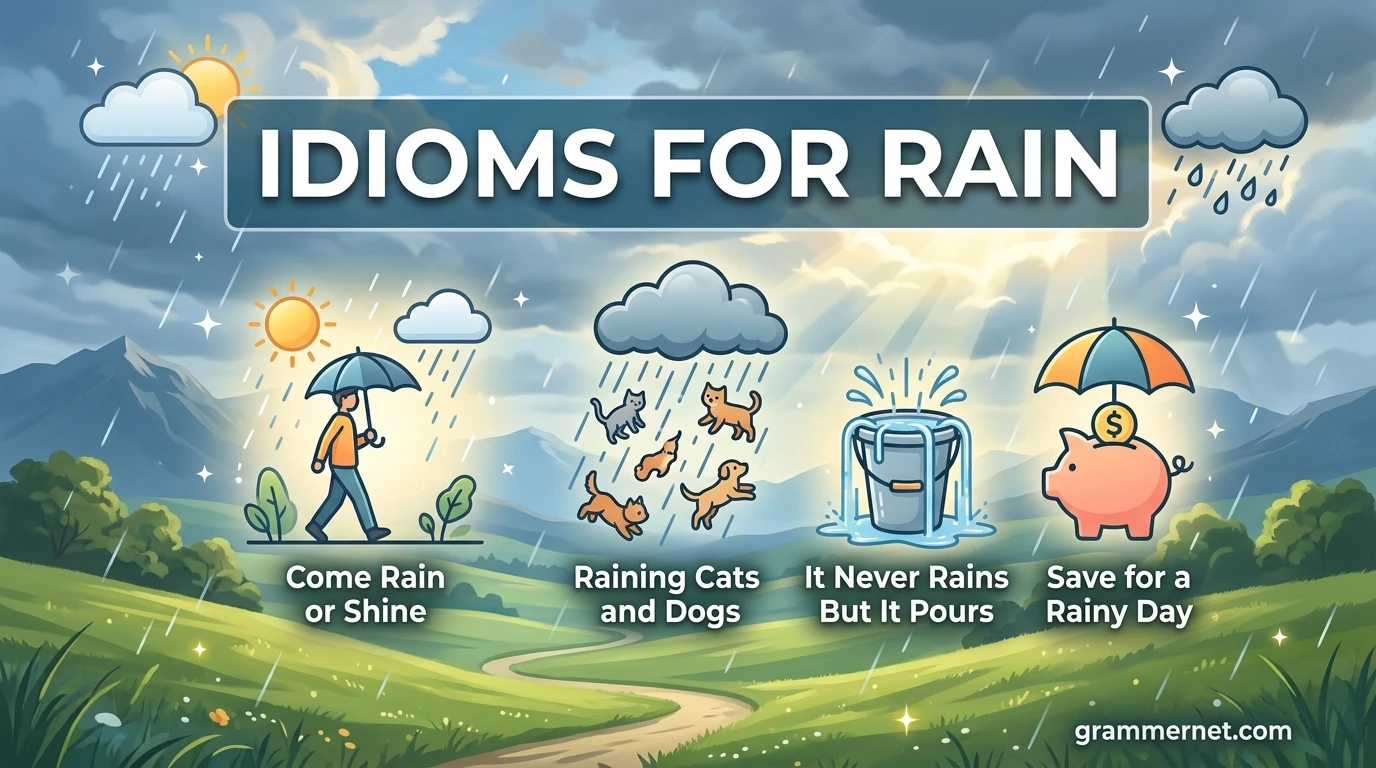
Rain is more than just weather—it is a powerful symbol in the English language. Idioms related to rain are widely used in daily conversations, literature, movies, and even professional communication. Learning these expressions helps English learners sound more natural, confident, and fluent.
Understanding idioms for rain also improves your emotional expression. You can describe mood, challenges, happiness, or even surprise using creative phrases instead of simple words. In real-life communication, idioms make your speech more engaging and expressive.
This article will help you master the most common and useful rain-related idioms with meanings, examples, origins, exercises, and practical usage tips.
What Are Idioms for Rain? (Quick Overview)
Idioms for rain are figurative expressions where “rain” or weather-related imagery is used to describe emotions, situations, or events. These phrases cannot be understood literally.
Why they matter:
- Improve fluency in English conversations
- Help you sound natural like native speakers
- Make storytelling more vivid and expressive
- Useful in exams, interviews, and writing
Common Idioms for Rain (With Meaning & Examples)
Below are the most important idioms for rain every English learner should know.
1. It’s raining cats and dogs
Meaning: It is raining very heavily.
Example:
- We stayed inside because it was raining cats and dogs all afternoon.
Alternative expressions:
- Pouring heavily
- Raining heavily
- Bucketing down
Fun fact: This idiom likely comes from old England when heavy rain washed debris through streets, creating the illusion of animals falling with the rain.
Use case: Casual conversation, storytelling, weather description.
2. Save for a rainy day
Meaning: To save money or resources for future difficulties.
Example:
- I’m saving part of my salary for a rainy day.
Alternative expressions:
- Prepare for hard times
- Build savings
Use case: Finance, planning, advice.
3. Come rain or shine
Meaning: No matter what happens; under any circumstances.
Example:
- I will attend your wedding, come rain or shine.
Alternative expressions:
- No matter what
- Regardless of situation
Use case: Commitment, promises, plans.
4. Rain on someone’s parade
Meaning: To spoil someone’s happiness or plans.
Example:
- I hate to rain on your parade, but the event is canceled.
Alternative expressions:
- Spoil the fun
- Disappoint someone
Use case: Social conversations, polite disagreement.
5. Take a rain check
Meaning: To politely refuse something now but accept it later.
Example:
- I’ll take a rain check on dinner tonight.
Alternative expressions:
- Postpone
- Reschedule
Use case: Invitations, social settings, business communication.
6. When it rains, it pours
Meaning: Problems or events happen all at once.
Example:
- First I lost my job, then my car broke down—when it rains, it pours.
Alternative expressions:
- Bad luck comes in groups
- Problems pile up
Use case: Emotional storytelling, complaints, reflection.
7. Right as rain
Meaning: Perfectly fine or healthy.
Example:
- After resting, I felt right as rain.
Alternative expressions:
- Feeling great
- Completely fine
Use case: Health, recovery, reassurance.
Idioms for Rain by Context (Smart Grouping)
Weather Descriptions
- It’s raining cats and dogs
- Bucketing down (informal)
Money & Planning
- Save for a rainy day
Social Situations
- Take a rain check
- Come rain or shine
Emotions & Life Problems
- When it rains, it pours
- Rain on someone’s parade
Health & Recovery
- Right as rain
Fun Origins of Rain Idioms
Many rain idioms come from:
- Medieval England streets (dirty water flowing like animals → “cats and dogs”)
- Agricultural life (rain as survival or hardship symbol)
- Victorian politeness culture (“rain check” from canceled outdoor events)
Rain has always symbolized both trouble and renewal, which is why it appears so often in idioms.
Interactive Practice Section
Fill in the blanks
(Easy)
- It’s __________ cats and dogs outside.
- I’ll take a __________ check on the invitation.
- We must save money for a __________ day.
(Medium)
- I didn’t want to __________ on your parade.
- We will support you, come rain or __________.
(Advanced)
- After losing his job and house, it felt like when it rains, it __________.
Answers
- raining
- rain
- rainy
- rain
- shine
- pours
Common Mistakes to Avoid
- Using idioms literally (“cats and dogs” are not real)
- Mixing words (e.g., “dogs and cats raining”)
- Using idioms in very formal academic writing
- Overusing idioms in one sentence
Tips for Using Rain Idioms Naturally
- Use 1 idiom per conversation for natural flow
- Practice with real-life situations (weather, plans, money)
- Watch English movies to hear usage in context
- Keep a personal “idiom journal”
Visual Learning Ideas (Infographic Suggestions)
You can create visuals like:
- Cloud diagram linking idioms to meanings
- Rain + piggy bank (save for a rainy day)
- Broken umbrella for “rain on someone’s parade”
- Calendar with “rain check”
- Before/after storm visuals for emotional idioms
Quick Quiz (Test Your Knowledge)
1. Which idiom means heavy rain? a) Right as rain b) Raining cats and dogs c) Take a rain check
2. “Save for a rainy day” refers to: a) Weather prediction b) Saving money c) Canceling plans
Answers: 1 → b 2 → b
FAQs – Idioms for Rain
What are idioms for rain used for?
They are used to describe weather, emotions, life situations, and actions in a creative way.
Are rain idioms formal or informal?
Most are informal, but some like “come rain or shine” are acceptable in formal speech.
How can I remember rain idioms easily?
Learn them with real-life examples and group them by meaning or situation.
Can I use rain idioms in exams?
Yes, especially in speaking and writing tests like IELTS or TOEFL.
What is the most common rain idiom?
“It’s raining cats and dogs” is the most widely known.
Conclusion
Idioms for rain bring color, emotion, and creativity into English communication. Instead of simple sentences, these expressions allow you to describe weather, emotions, challenges, and life experiences in a more natural and fluent way.
By learning idioms like “save for a rainy day” or “come rain or shine,” you not only improve vocabulary but also understand how native speakers think and express ideas.
The key is consistent practice—use these idioms in daily conversation, writing, and listening. Over time, they will become a natural part of your English.
Keep learning, keep practicing, and let your English shine—even when it rains.
