
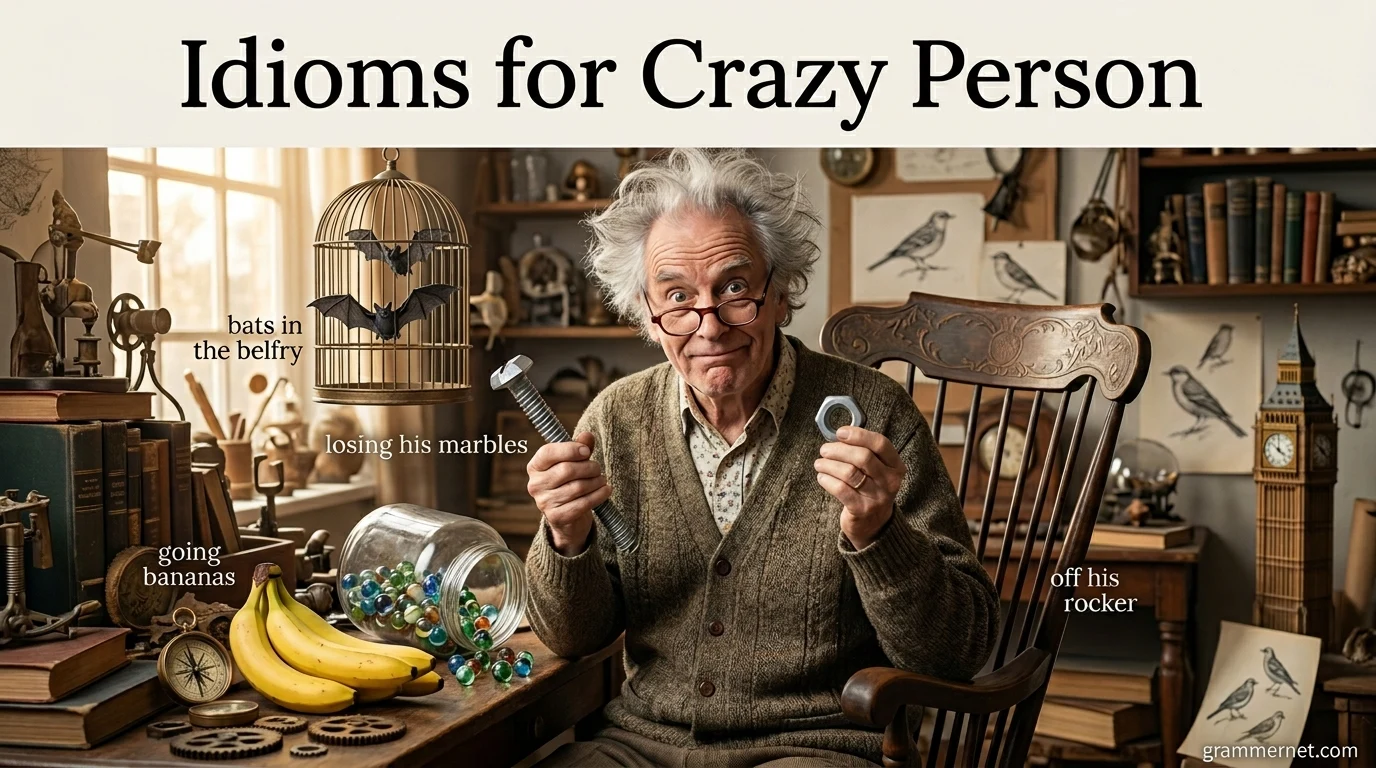
Language is full of colorful ways to describe unusual behavior, extreme emotions, or someone acting in a very wild way. Learning idioms for crazy person helps English learners understand jokes, movies, casual conversations, and even warning signs in real life.
These idioms can also help you express surprise, frustration, or humor more naturally in English. At the same time, they must be used carefully because many of them are rude, informal, or even offensive. In this guide, you will learn the most common expressions, what they mean, when to use them, and how to avoid mistakes.
What Are Idioms for Crazy Person?
Idioms are phrases whose meanings are not literal. Idioms for crazy person are expressions used to describe someone who seems bizarre, unreasonable, wild, mentally unstable, or very eccentric.
For example, if someone says, “He’s a few sandwiches short of a picnic,” they do not mean the person is missing food. They mean the person seems foolish or not fully sensible.
These idioms are common in informal English. Some are humorous, some are insulting, and some are playful. Because of this, tone matters a lot. The same phrase can sound funny with friends and offensive with strangers.
Why Learning These Idioms Matters
Learning these idioms is helpful for several reasons.
You will understand native speakers better in movies, TV shows, and online content. You will also recognize when someone is joking, insulting, or speaking sarcastically. These idioms can help you describe strange behavior in a more vivid way. At the same time, they help you avoid misunderstandings when English speakers use strong or negative language.
If you are an English learner, this topic is especially useful because it teaches both vocabulary and social sensitivity.
Common Idioms for Crazy Person
1. Not Playing With a Full Deck
Meaning: Not mentally normal, not thinking clearly, or not very sensible.
Example: He believed that unbelievable story, so people joked that he wasn’t playing with a full deck.
Alternative expressions: not thinking clearly, a bit strange, not very sensible
Typical use cases: informal speech, jokes, criticism
Fun fact / origin: This idiom comes from card games. A full deck means all the cards are there. If it is not full, something is missing, just like a person who seems mentally “missing” something.
2. A Few Sandwiches Short of a Picnic
Meaning: Foolish, odd, or not fully sensible.
Example: He showed up in winter clothes during a heatwave. People said he was a few sandwiches short of a picnic.
Alternative expressions: a bit silly, not all there, not very sharp
Typical use cases: humorous insults, casual conversation
Tone: Playful but can still be rude.
Fun fact / origin: This phrase uses the image of a picnic basket that is incomplete, making the person seem incomplete or missing something mentally.
3. Not the Sharpest Tool in the Shed
Meaning: Not very intelligent or quick to understand.
Example: He forgot his own appointment, so people said he wasn’t the sharpest tool in the shed.
Alternative expressions: not smart, slow to catch on, not very bright
Typical use cases: mild insult, teasing, informal speech
Fun fact / origin: This idiom compares a person to a tool. A sharp tool works well, so “not the sharpest” suggests someone is less effective or less clever.
4. Have a Screw Loose
Meaning: To act strangely or foolishly.
Example: Some people think he has a screw loose because of his strange ideas.
Alternative expressions: act weird, be odd, not think normally
Typical use cases: informal criticism, jokes, casual talk
Important note: This can sound rude or insulting.
Fun fact / origin: The image comes from a machine with a loose screw that does not work properly.
5. A Brick Short of a Load
Meaning: Not very smart or missing common sense.
Example: If he thinks that plan will work, he must be a brick short of a load.
Alternative expressions: not sensible, not very bright
Typical use cases: sarcastic remarks, informal criticism
Fun fact / origin: This idiom uses the image of a load of bricks missing one piece, suggesting incompleteness.
6. Two Sandwiches Short of a Picnic
Meaning: Very foolish or mentally not fully together.
Example: That idea sounded like he was two sandwiches short of a picnic.
Alternative expressions: not very sensible, a bit crazy, foolish
Typical use cases: humorous insult, casual speech
Tone: Funny, but still not polite if used directly.
7. Not All There
Meaning: Not mentally focused, confused, or slightly unstable.
Example: He seemed not all there after staying awake all night.
Alternative expressions: confused, distracted, odd
Typical use cases: casual description, polite understatement
Important note: This can sound rude depending on the tone and situation.
8. Out of One’s Mind
Meaning: Acting irrationally, wildly, or in a way that seems crazy.
Example: She was out of her mind with excitement after the concert.
Alternative expressions: wild, irrational, overwhelmed
Typical use cases: strong emotions, drama, shock
Note: This idiom can describe both excitement and madness depending on context.
9. Mad as a Hatter
Meaning: Completely crazy or wildly eccentric.
Example: His strange behavior made everyone think he was mad as a hatter.
Alternative expressions: very crazy, totally eccentric
Typical use cases: literary language, humorous speech
Fun fact / origin: This comes from the historical mercury poisoning suffered by hat makers, which sometimes caused odd behavior.
10. Off One’s Rocker
Meaning: Acting crazy or thinking irrationally.
Example: He must be off his rocker if he thinks that plan will work.
Alternative expressions: crazy, irrational, not thinking straight
Typical use cases: casual criticism, joking, frustration
Tone: Informal and slightly rude.
11. Not Right in the Head
Meaning: Not mentally normal or behaving in a strange way.
Example: People said he was not right in the head after that strange outburst.
Alternative expressions: not thinking normally, mentally confused
Typical use cases: serious criticism, informal talk
Important note: This is harsh and should be used carefully.
12. Loony Tunes
Meaning: Very silly, crazy, or irrational.
Example: That plan sounds like loony tunes to me.
Alternative expressions: crazy, ridiculous, silly
Typical use cases: humorous criticism, casual speech
Fun fact / origin: This phrase is influenced by the famous cartoon title Looney Tunes.
13. Nutty as a Fruitcake
Meaning: Very eccentric or crazy.
Example: He has a nutty idea for every problem.
Alternative expressions: very odd, eccentric, crazy
Typical use cases: light humor, casual speech
Fun fact / origin: Fruitcake often has lots of different ingredients, so the image became linked with oddness and unpredictability.
14. Losing It
Meaning: Becoming emotionally out of control or acting irrationally.
Example: She’s been under a lot of stress and is starting to lose it.
Alternative expressions: snap, break down, lose control
Typical use cases: stress, anger, emotional pressure
Tone: Common and widely understood.
15. Around the Bend
Meaning: Acting strange, crazy, or irrational.
Example: He’s been around the bend since the long trip.
Alternative expressions: mentally off, strange, irrational
Typical use cases: casual speech, humorous criticism
Fun fact / origin: The phrase suggests someone has gone “off course” mentally, just like a road bending away from the straight path.
Idioms for Crazy Person Grouped by Context
Grouping idioms by context helps you remember and use them correctly.
For Mild Teasing
- not the sharpest tool in the shed
- a few sandwiches short of a picnic
- nutty as a fruitcake
- loony tunes
Example: He forgot his keys again—he’s not the sharpest tool in the shed.
For Strong Insults
- not right in the head
- have a screw loose
- off one’s rocker
- not playing with a full deck
Example: Be careful: these are harsh and can hurt people’s feelings.
For Strange or Eccentric Behavior
- mad as a hatter
- around the bend
- not all there
Example: She’s eccentric, but some people say she’s mad as a hatter.
For Emotional Overload
- out of one’s mind
- losing it
Example: He was losing it after too much stress.
Tips for Using These Idioms Effectively
Use the idiom that matches the tone you want. Some are playful, while others are strong and insulting.
Practice them in context. The same phrase may sound funny, rude, or serious depending on the situation.
If you are unsure, choose a softer expression like “eccentric,” “strange,” or “not thinking clearly” instead of a harsh idiom.
When speaking with people you do not know well, be extra careful. A careless insult can cause offense quickly.
Common Mistakes to Avoid
Do not use these idioms literally. They are figurative, not actual descriptions of mental health.
Do not assume all of them mean the same thing. Some mean silly, some mean confused, and some mean emotionally overwhelmed.
Avoid using insulting idioms in formal or professional settings.
Do not use these phrases to mock mental health conditions. That can be disrespectful and harmful.
Fun Facts About Crazy Person Idioms
Many of these idioms come from everyday images like tools, sandwiches, decks of cards, and machines.
That is why they are easy to picture and remember. For example, “not the sharpest tool in the shed” uses a tool image. “Have a screw loose” uses the image of a machine not working properly. “Mad as a hatter” comes from historical occupational health.
These idioms reflect how English often uses objects and action to describe behavior.
Interactive Practice Activities
Easy Level: Fill in the Blanks
Complete the sentences with the correct idiom.
- He must have a screw _______.
- She’s not the sharpest tool in the _______.
- People said he was losing _______.
Answers:
- loose
- shed
- it
Medium Level: Match the Idiom to the Meaning
Match each idiom with the correct meaning.
- Not playing with a full deck
- Around the bend
- Nutty as a fruitcake
A. Very eccentric or crazy B. Acting strange or irrational C. Not thinking clearly
Answers: 1-C 2-B 3-A
Advanced Level: Choose the Best Idiom
Choose the best idiom for each situation.
- A person keeps making irrational decisions and seems mentally overwhelmed.
- A friend jokingly describes someone as very silly but not dangerous.
- A person behaves in a very strange and unusual way.
Answers:
- Losing it / out of one’s mind
- Not the sharpest tool in the shed
- Mad as a hatter / around the bend
Bonus Challenge: Write Your Own Sentences
Use these idioms in your own writing or speaking:
- have a screw loose
- a few sandwiches short of a picnic
- not all there
- off one’s rocker
Sample answers:
- He must have a screw loose if he thinks that is a good idea.
- That joke was funny, but I wouldn’t say he’s a few sandwiches short of a picnic.
- She seemed not all there after the long night.
- He’s off his rocker if he believes that plan will work.
Suggestions for Visuals and Infographics
A useful visual guide for idioms for crazy person could include:
- a tone chart showing playful, rude, and serious expressions
- icons for each idiom, such as cards, tools, screws, and sandwiches
- literal vs figurative meaning comparisons
- a “when to use” chart for safe and unsafe contexts
- cartoon illustrations to make the idioms memorable
These visuals help learners see the emotional tone before using the phrase.
Best Ways to Practice These Idioms
Read dialogues, books, and movies where people use strong informal language. Write one sentence a day using a new idiom. Practice identifying whether an idiom is funny, rude, or serious. Use softer alternatives when you are unsure and reserve stronger idioms for informal situations only.
FAQs
1. What are idioms for crazy person?
They are expressions used to describe someone who seems strange, foolish, irrational, or emotionally overwhelmed.
2. Are these idioms offensive?
Many of them are rude or insulting, so they should be used carefully or avoided in polite settings.
3. Which idiom is the mildest?
“Not the sharpest tool in the shed” is usually milder than phrases like “not right in the head.”
4. Can I use these idioms in professional English?
It is better not to. Use respectful alternatives like “eccentric,” “unusual,” or “not thinking clearly.”
5. Why do English speakers use these kinds of idioms?
They make speech more vivid, emotional, and often humorous.
6. How can I remember them better?
Learn them in context, group them by tone, and practice with example sentences.
Conclusion
Learning idioms for crazy person can help you understand everyday English more deeply, but it also teaches you something important about tone, respect, and context. Some of these expressions are playful and funny. Others are harsh and can offend people if used carelessly.
The smartest way to use them is to recognize them when you hear them, practice them in context, and choose gentler language when needed. Keep building your vocabulary, keep paying attention to tone, and use these phrases wisely in real conversations. With practice, your English will become more natural, flexible, and emotionally accurate.
