
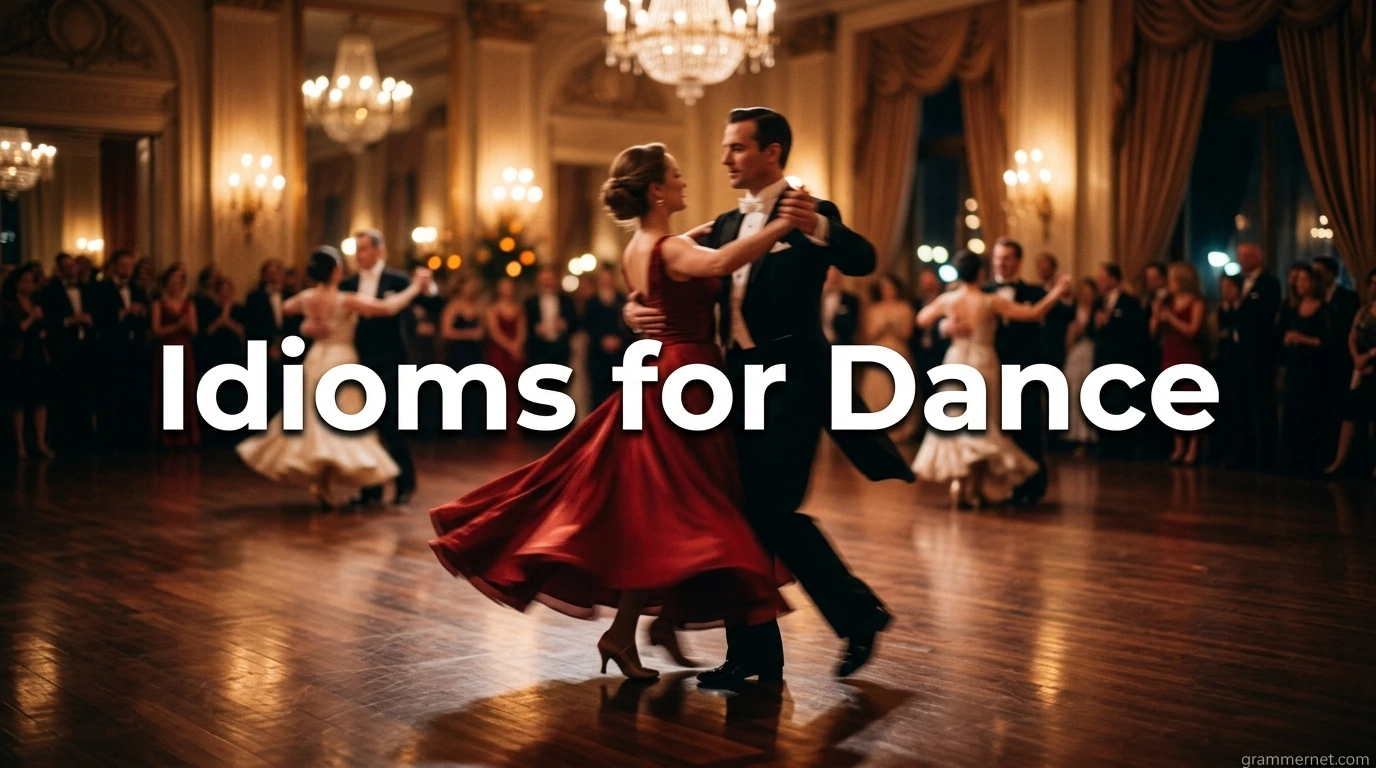
Dance is more than movement—it is rhythm, emotion, culture, and expression. In English, dance also appears in many colorful idioms and fixed expressions that people use every day, even when they are not talking about actual dancing. Learning idioms for dance helps English learners understand native speakers more naturally, enjoy movies and conversations more fully, and speak with more confidence. These expressions can describe fun, harmony, confusion, avoidance, control, or celebration, making your English sound more vivid and fluent in real life.
What Are Idioms for Dance?
Idioms for dance are expressions that include the word dance or use dance imagery to describe ideas beyond literal dancing. Sometimes they are about actual dancing, but often they describe how people behave, react, avoid something, or move through life.
For example, “dance around the issue” has nothing to do with ballet or salsa. It means to avoid talking directly about a problem.
These idioms are common in:
- everyday conversations
- business meetings
- social situations
- storytelling
- news and entertainment writing
Why Learn Idioms for Dance?
Learning dance-related idioms gives you several benefits:
Practical benefits
- Better understanding of native English
- More natural speaking and writing
- Stronger listening comprehension
- More expressive vocabulary
Emotional and social benefits
- Helps you talk about fun and celebration naturally
- Lets you describe conflict or avoidance clearly
- Makes your English feel more lively and human
- Helps you understand humor, criticism, and figurative speech
These idioms are especially useful when talking about:
- parties and celebrations
- work and teamwork
- difficult conversations
- behavior and control
- confidence and performance
Common Idioms for Dance
1. Dance Around the Issue
Meaning: To avoid talking about the main problem directly.
Example: “Stop dancing around the issue and tell me what happened.”
Alternative expressions:
- avoid the topic
- beat around the bush
- not speak directly
Typical use cases:
- arguments
- meetings
- difficult conversations
Fun fact / origin: The image suggests moving around something without going straight to it, just like a dancer circles the floor.
2. Dance to Someone’s Tune
Meaning: To do what someone else wants; to be controlled by another person.
Example: “He always dances to his boss’s tune.”
Alternative expressions:
- follow orders
- obey someone
- be controlled by someone
Typical use cases:
- workplace power dynamics
- relationships
- authority discussions
Fun fact / origin: This idiom likely comes from the idea that a dancer moves according to the music played by someone else.
3. Make a Song and Dance About Something
Meaning: To make too much fuss or drama about something, often overreacting.
Example: “She made a song and dance about the small delay.”
Alternative expressions:
- overreact
- make a big deal
- fuss unnecessarily
Typical use cases:
- complaints
- family discussions
- casual criticism
Tone: Usually mildly critical, often humorous
4. Lead Someone a Merry Dance
Meaning: To cause someone confusion, trouble, or a difficult time.
Example: “The mystery suspect led the detectives a merry dance.”
Alternative expressions:
- keep someone busy in a frustrating way
- cause trouble
- give someone a hard time
Typical use cases:
- detective stories
- work problems
- tricky situations
Fun fact / origin: This older expression uses “dance” as a metaphor for a wild, troublesome experience rather than enjoyable movement.
5. Cut a Rug
Meaning: To dance very well or energetically.
Example: “He really cut a rug at the wedding.”
Alternative expressions:
- dance skillfully
- dance with energy
- show off on the dance floor
Typical use cases:
- parties
- weddings
- informal, fun descriptions
Fun fact / origin: This is an old American slang expression. The “rug” refers to a dance floor or carpet that gets worn by lots of dancing.
Tone: Very informal and playful
6. Dance the Night Away
Meaning: To spend the night dancing, often happily and for a long time.
Example: “We danced the night away at the concert.”
Alternative expressions:
- dance for hours
- party all night
- enjoy the evening dancing
Typical use cases:
- weddings
- concerts
- celebrations
- travel and nightlife
Tone: Positive and joyful
7. Get into the Swing of Things
Meaning: To become comfortable with a routine, activity, or new environment.
Example: “It took a week, but she eventually got into the swing of things.”
Alternative expressions:
- get used to it
- settle in
- find the rhythm
Typical use cases:
- new jobs
- school
- moving to a new place
Fun fact / origin: Although not strictly about dancing, the idiom uses the image of moving rhythmically and comfortably.
8. Dance Attendance on Someone
Meaning: To serve or wait on someone carefully, often in an eager or overly attentive way.
Example: “The assistants danced attendance on the celebrity all day.”
Alternative expressions:
- wait on someone
- attend to someone
- serve someone constantly
Typical use cases:
- service situations
- historical writing
- stories about royalty or celebrities
Tone: Can sound formal, old-fashioned, or critical
Fun fact / origin: This old phrase comes from the idea of moving around someone as if following their lead in a dance.
9. All Singing, All Dancing
Meaning: Having every possible feature; complete, modern, and impressive.
Example: “It’s an all-singing, all-dancing new smartphone.”
Alternative expressions:
- fully featured
- complete package
- top-of-the-line
Typical use cases:
- product descriptions
- advertising
- informal reviews
Fun fact / origin: This is especially common in British English and is often used to describe products or systems.
10. Lead a Dance
Meaning: To guide or control the steps in a situation, sometimes literally and sometimes figuratively.
Example: “In the meeting, she led the dance and everyone followed her plan.”
Alternative expressions:
- take the lead
- be in control
- guide the group
Typical use cases:
- teamwork
- leadership
- social events
Note: This idiom is less common than some others, but it is still useful in understanding figurative English.
11. Last Dance
Meaning: The final opportunity or ending moment, often emotional or symbolic.
Example: “This could be the band’s last dance before retirement.”
Alternative expressions:
- final chance
- last opportunity
- closing moment
Typical use cases:
- concerts
- sports
- emotional goodbyes
Fun fact / origin: The phrase often carries romantic or nostalgic meaning, especially in songs, films, and stories.
12. Dance on Someone’s Grave
Meaning: To feel bitter satisfaction when someone you dislike suffers after death or defeat.
Example: “His rivals might dance on his grave after his downfall.”
Alternative expressions:
- feel spiteful happiness
- celebrate someone’s defeat cruelly
Typical use cases:
- dark commentary
- fiction
- serious emotional criticism
Caution: This is a very strong and negative expression. Use carefully or avoid it in polite speech.
13. Dance with Death
Meaning: To take a serious risk or engage in dangerous behavior.
Example: “Driving that fast is almost dancing with death.”
Alternative expressions:
- take a deadly risk
- flirt with danger
- risk one’s life
Typical use cases:
- action writing
- warnings
- dramatic descriptions
Tone: Serious and dramatic
14. Dance Like Nobody’s Watching
Meaning: To act freely and without worrying about what others think.
Example: “Sometimes you should dance like nobody’s watching.”
Alternative expressions:
- be yourself
- act freely
- stop worrying about judgment
Typical use cases:
- motivational speech
- self-confidence
- social media captions
Fun fact: This phrase is often quoted as advice for living boldly and joyfully.
15. Put on a Song and Dance
Meaning: To make a big performance or effort to impress others, sometimes unnecessarily.
Example: “He put on a whole song and dance to explain why he was late.”
Alternative expressions:
- make a big performance
- exaggerate
- put on a show
Typical use cases:
- excuses
- dramatic behavior
- criticism
Tone: Often humorous or slightly critical
Idioms for Dance by Context
1.Dance and Celebration
- dance the night away
- cut a rug
- dance like nobody’s watching
- all singing, all dancing
2.Dance and Avoidance
- dance around the issue
- make a song and dance about something
- put on a song and dance
3.Dance and Control
- dance to someone’s tune
- dance attendance on someone
- lead the dance
4.Dance and Danger
- dance with death
- lead someone a merry dance
- dance on someone’s grave
Grouping idioms by context makes them easier to remember and use naturally.
How to Use Dance Idioms Naturally
Match the tone
Some dance idioms are joyful, some are critical, and some are formal or old-fashioned.
- Positive: dance the night away, dance like nobody’s watching
- Critical: dance around the issue, make a song and dance
- Serious: dance with death
Use them in the right setting
A fun expression like cut a rug is great for casual conversation but not for a business report.
Learn in full sentences
Idioms are much easier to remember when practiced in context.
Notice regional differences
Some dance idioms, like all singing, all dancing, are more common in British English.
Common Mistakes to Avoid
Taking idioms literally
“Dance around the issue” does not mean actual dancing.
Using informal idioms in formal writing
Avoid slang like cut a rug in academic essays or professional reports.
Confusing similar idioms
- dance around the issue = avoid the main point
- make a song and dance = make a fuss
- dance to someone’s tune = be controlled by someone
Using negative idioms in polite situations
Expressions like dance on someone’s grave can sound cruel or offensive.
Overusing idioms
Too many idioms in one sentence can sound unnatural.
Fun Origins Behind Dance Idioms
Cut a Rug
This old American slang refers to energetic dancing that wore out the rug or floor.
Dance to Someone’s Tune
This comes from the idea that dancers move according to the music being played.
Dance Around the Issue
The image suggests moving close to something without directly addressing it.
All Singing, All Dancing
This phrase became popular in British English as a lively way to describe something complete and impressive.
Knowing the origin often makes the idiom easier to remember.
Interactive Practice Section
Exercise 1: Fill in the Blanks (Easy)
- Let’s ______ the night away at the wedding.
- He always dances to his boss’s ______.
- Stop dancing around the ______ and tell me the truth.
Answers
- dance
- tune
- issue
Exercise 2: Match the Idiom to the Meaning (Medium)
IdiomMeaningCut a rugA. Avoid the main problemDance around the issueB. Dance energeticallyDance like nobody’s watchingC. Be free and uninhibited
Answers
- Cut a rug → B
- Dance around the issue → A
- Dance like nobody’s watching → C
Exercise 3: Choose the Best Idiom (Advanced)
- “He made too much drama about a small delay.”
- “The new employee finally felt comfortable in the routine.”
- “The company launched a complete, impressive new product.”
Answers
- Made a song and dance about it
- Got into the swing of things
- All singing, all dancing
Quick Quiz
Question 1
Which idiom means “to avoid the main point”?
A. Dance to someone’s tune B. Dance around the issue C. Cut a rug
Answer: B
Question 2
Which idiom means “to be controlled by someone”?
A. Dance the night away B. Dance attendance on someone C, Dance to someone’s tune
Answer: C
Question 3
Which idiom means “to dance very well or energetically”?
A. Cut a rug B. Lead a dance C. Last dance
Answer: A
Tips for Remembering Dance Idioms
Use movement-based images
Picture someone spinning, avoiding a question, following music, or dancing all night.
Practice with real-life examples
Describe parties, work situations, or arguments using the idioms.
Make flashcards
Write each idiom with a short meaning and example sentence.
Watch movies and music videos
Dance idioms are common in entertainment, especially in casual dialogue and song lyrics.
Suggested Visuals and Infographics
To make this topic more engaging, you can add:
- a dance idiom chart by category
- a “positive vs negative dance idioms” table
- flashcards with example sentences and icons
- a literal vs figurative meaning comparison
- a dance floor infographic showing movement and control idioms
Visuals help learners connect meaning with memory more effectively.
Why Learning Idioms for Dance Matters
Dance idioms are useful because dance itself is a strong image in English. These expressions appear in casual speech, business conversations, storytelling, and entertainment. Learning them helps you understand tone, humor, criticism, and celebration more naturally. They also make your English more vivid, expressive, and culturally aware.
These idioms are especially helpful when discussing:
- parties and celebrations
- conflict and avoidance
- leadership and control
- risk and danger
- confidence and self-expression
FAQs
What are idioms for dance?
They are expressions that use dance or dance imagery to describe ideas beyond literal dancing.
Why should English learners study dance idioms?
They help learners sound natural and understand native speakers in conversation, books, and media.
What does “dance around the issue” mean?
It means to avoid talking directly about the main problem.
What does “dance to someone’s tune” mean?
It means to do what someone else wants or to be controlled by them.
What does “cut a rug” mean?
It means to dance energetically or skillfully.
What does “dance like nobody’s watching” mean?
It means to act freely without worrying about what others think.
Can dance idioms be used in writing?
Yes, especially in creative writing, articles, captions, and conversational English.
Conclusion
Learning idioms for dance is a fun and practical way to improve your English vocabulary and communication skills. These expressions help you talk about celebration, avoidance, control, confidence, and even danger in a natural and memorable way. From dance the night away to dance around the issue, dance to someone’s tune, and cut a rug, these idioms appear often in real English and can make your speech and writing more expressive.
The best way to master them is through regular practice, reading examples, and using them in real-life situations. Over time, these dance idioms will become a natural part of your vocabulary and help you speak English with more confidence, rhythm, and style.
