
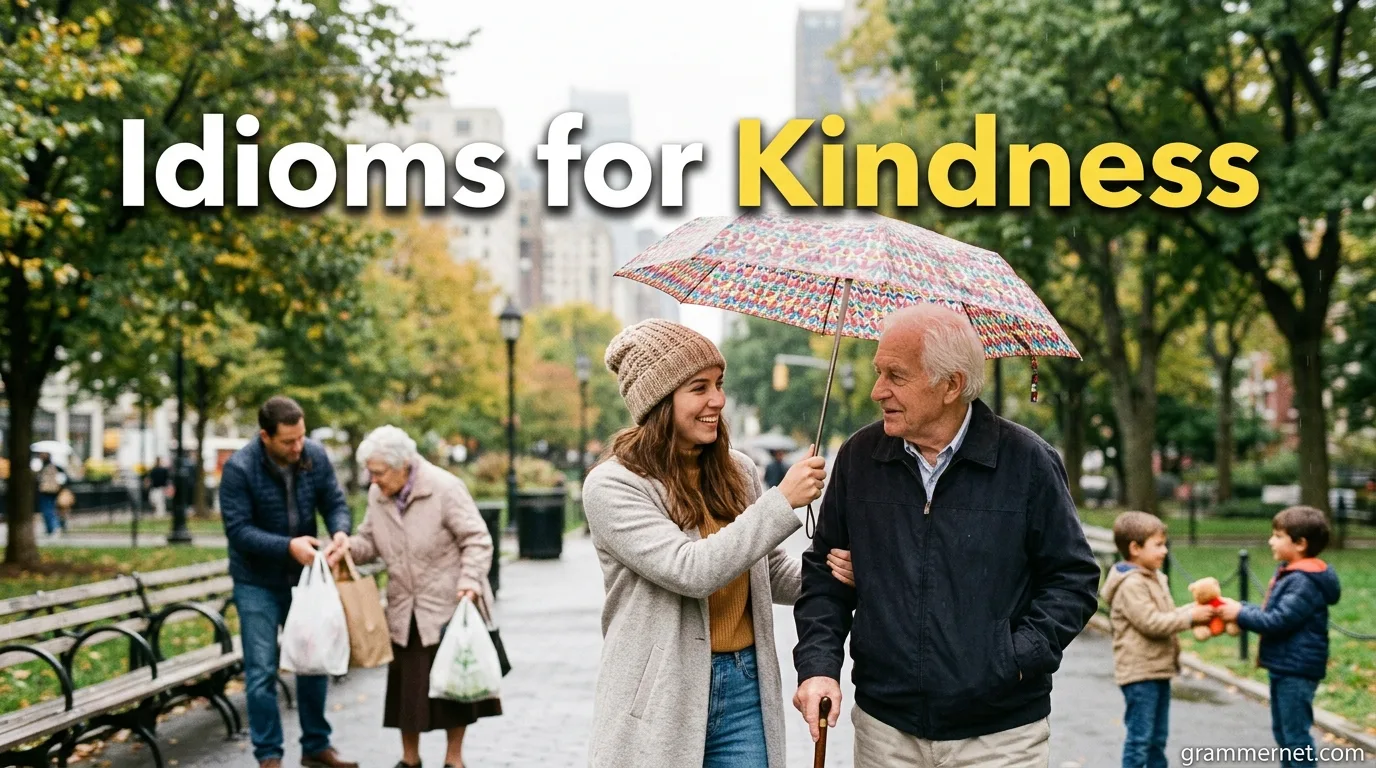
Kindness is one of the most valued human qualities, and learning idioms for kindness can make your English sound warmer, more natural, and emotionally expressive. These idioms help English learners describe caring people, generous actions, and compassionate behavior in everyday conversations, writing, and professional communication.
Whether you are talking with friends, writing essays, giving compliments, or improving your speaking skills, kindness-related idioms add color and depth to your language. Understanding these expressions also helps you better understand movies, books, songs, and native English conversations.
What Are Idioms for Kindness?
Idioms for kindness are expressions used to describe people who are caring, generous, thoughtful, or compassionate. These phrases often have meanings that are different from the literal words used.
For example, “heart of gold” does not mean a real golden heart. It means someone is extremely kind and caring.
Learning these idioms helps you:
- Speak more naturally
- Improve vocabulary
- Express emotions clearly
- Understand native speakers better
- Add personality to your English
Most Popular Idioms for Kindness
Heart of Gold
Meaning: A very kind and generous personality.
Example: My grandmother has a heart of gold and always helps people in need.
Alternative Expressions:
- Kind-hearted
- Warm-hearted
- Generous soul
Fun Fact: Gold symbolizes something precious and valuable, which is why this idiom represents kindness.
Typical Use Cases:
- Complimenting someone
- Describing family members
- Praising coworkers or friends
Give Someone the Shirt Off Your Back
Meaning: To help someone even at personal sacrifice.
Example: Ali would give you the shirt off his back if you needed help.
Alternative Expressions:
- Extremely generous
- Selfless person
- Always willing to help
Typical Use Cases:
- Talking about loyal friends
- Describing generous people
- Emotional storytelling
Go Out of Your Way
Meaning: To make extra effort to help someone.
Example: My teacher went out of her way to help me understand the lesson.
Alternative Expressions:
- Make an extra effort
- Do more than expected
- Take special care
Typical Use Cases:
- School settings
- Workplace appreciation
- Customer service situations
A Shoulder to Cry On
Meaning: Someone who listens and supports others emotionally.
Example: After the breakup, Sarah was a shoulder to cry on for her friend.
Alternative Expressions:
- Emotional support
- Trusted listener
- Caring companion
Typical Use Cases:
- Friendship discussions
- Emotional situations
- Relationship advice
Bend Over Backwards
Meaning: To do everything possible to help someone.
Example: The staff bent over backwards to make the guests comfortable.
Alternative Expressions:
- Try very hard
- Do everything possible
- Make great efforts
Typical Use Cases:
- Customer service
- Workplace situations
- Family support
Kill Them With Kindness
Meaning: Respond to negativity with kindness.
Example: Instead of arguing, she decided to kill them with kindness.
Alternative Expressions:
- Stay polite
- Be calm and kind
- Respond positively
Fun Fact: This idiom became popular as advice for handling rude people peacefully.
Typical Use Cases:
Have a Soft Spot for Someone
Meaning: To feel special kindness or affection toward someone.
Example: My uncle has a soft spot for stray animals.
Alternative Expressions:
- Feel sympathy for
- Care deeply about
- Be affectionate toward
Typical Use Cases:
- Talking about pets
- Family relationships
- Emotional preferences
Extend a Helping Hand
Meaning: To offer help.
Example: The community extended a helping hand after the flood.
Alternative Expressions:
- Offer assistance
- Support someone
- Lend help
Typical Use Cases:
- Charity work
- Volunteer activities
- Community support
Kindness Costs Nothing
Meaning: Being kind is free and valuable.
Example: A smile and kind words matter because kindness costs nothing.
Alternative Expressions:
- Be nice to others
- Small acts matter
- Compassion is free
Typical Use Cases:
- Motivational speeches
- Social media captions
- Educational discussions
Wear Your Heart on Your Sleeve
Meaning: To openly show emotions and compassion.
Example: She wears her heart on her sleeve and truly cares about people.
Alternative Expressions:
- Emotionally open
- Honest feelings
- Sensitive person
Typical Use Cases:
- Personality descriptions
- Emotional conversations
- Relationship discussions
Idioms for Kindness in Different Contexts
Kindness in Friendship
These idioms are commonly used among friends:
- A shoulder to cry on
- Through thick and thin
- Have someone’s back
- Be there for someone
Example Sentence: True friends always have your back during difficult times.
Kindness in the Workplace
Professional kindness idioms include:
- Go the extra mile
- Extend a helping hand
- Bend over backwards
- Team player
Example Sentence: Good managers go the extra mile to support employees.
Kindness in Family Relationships
Useful family-related idioms:
- Heart of gold
- Runs in the family
- Like a mother hen
- Give unconditional love
Example Sentence: My father has a heart of gold and always supports everyone.
Tips for Using Idioms for Kindness Naturally
Learn Idioms in Context
Do not memorize idioms alone. Learn them through conversations and examples.
Practice Speaking Regularly
Use one idiom daily in conversations or writing practice.
Watch English Movies and Shows
You will hear kindness idioms in emotional scenes and daily conversations.
Keep a Vocabulary Notebook
Write:
- The idiom
- Meaning
- Example sentence
- Similar expressions
Avoid Overusing Idioms
Using too many idioms in one conversation can sound unnatural.
Common Mistakes to Avoid
Using Idioms Literally
Incorrect: “She has a real gold heart.”
Correct: “She has a heart of gold.”
Using Formal Idioms in Academic Writing
Some idioms are too informal for essays or research papers.
Better for formal writing:
- Compassionate
- Supportive
- Generous
Mixing Idioms Incorrectly
Incorrect: “He gave his shoulder off his back.”
Correct: “He would give you the shirt off his back.”
Interactive Practice Exercises
Fill in the Blanks (Easy)
Choose the correct idiom.
- My friend always helps everyone. She has a __________.
- He stayed calm and polite because he wanted to kill them with __________.
- Our neighbors extended a helping __________ after the storm.
Answers
- heart of gold
- kindness
- hand
Match the Idiom to the Meaning (Medium)
IdiomMeaningBend over backwardsA. Emotional supportShoulder to cry onB. Make a huge effortHeart of goldC. Very kind person
Answers
- Bend over backwards → B
- Shoulder to cry on → A
- Heart of gold → C
Create Your Own Sentences (Advanced)
Write original sentences using:
- Go out of your way
- Soft spot
- Helping hand
This activity improves speaking and writing fluency.
Mini Quiz on Idioms for Kindness
Question 1
Which idiom means “to help someone emotionally”?
A. Bend over backwards B. Shoulder to cry on C. Heart of gold
Answer: B
Question 2
Which idiom describes a very generous person?
A. Heart of gold B. Cold shoulder C. Big mouth
Answer: A
Question 3
What does “kill them with kindness” mean?
A. Be rude B. Ignore people C. Respond kindly to negativity
Answer: C
Suggested Visuals and Infographics
To make this topic more engaging, consider adding:
- A chart of idioms and meanings
- Cartoon illustrations of kindness idioms
- Conversation examples in speech bubbles
- Infographics comparing formal and informal expressions
- Flashcards for quick memorization
Why Learning Kindness Idioms Matters
Kindness idioms improve both language and emotional intelligence. They help learners:
- Express empathy naturally
- Build stronger conversations
- Sound more fluent
- Understand cultural expressions
- Connect emotionally with native speakers
These idioms are especially useful in:
- Schools
- Workplaces
- Friendships
- Public speaking
- Customer service
FAQs About Idioms for Kindness
What are the most common idioms for kindness?
Some popular idioms include:
- Heart of gold
- Extend a helping hand
- Go out of your way
- Kill them with kindness
Are kindness idioms useful in daily conversation?
Yes. Native English speakers use them regularly in casual conversations, movies, and workplace communication.
Can idioms for kindness be used in formal writing?
Most idioms are better for informal communication. In formal writing, simpler words like “compassionate” or “supportive” are preferred.
How can I memorize kindness idioms faster?
Practice them in sentences, conversations, and writing exercises. Flashcards and storytelling also help.
What is the easiest kindness idiom for beginners?
“Heart of gold” is easy to understand and commonly used.
Why do English speakers use idioms so often?
Idioms make speech colorful, emotional, and culturally expressive.
Conclusion
Learning idioms for kindness is an excellent way to improve your English fluency while expressing warmth, empathy, and compassion more naturally. These idioms help learners communicate emotions clearly, understand native speakers better, and sound more confident in everyday conversations. From “heart of gold” to “extend a helping hand,” each expression adds personality and emotional depth to your language.
To master these idioms, practice using them in conversations, writing exercises, and real-life situations. Focus on understanding the meaning, context, and tone of each phrase. Over time, these expressions will become a natural part of your vocabulary, helping you communicate with greater confidence, kindness, and fluency.
