
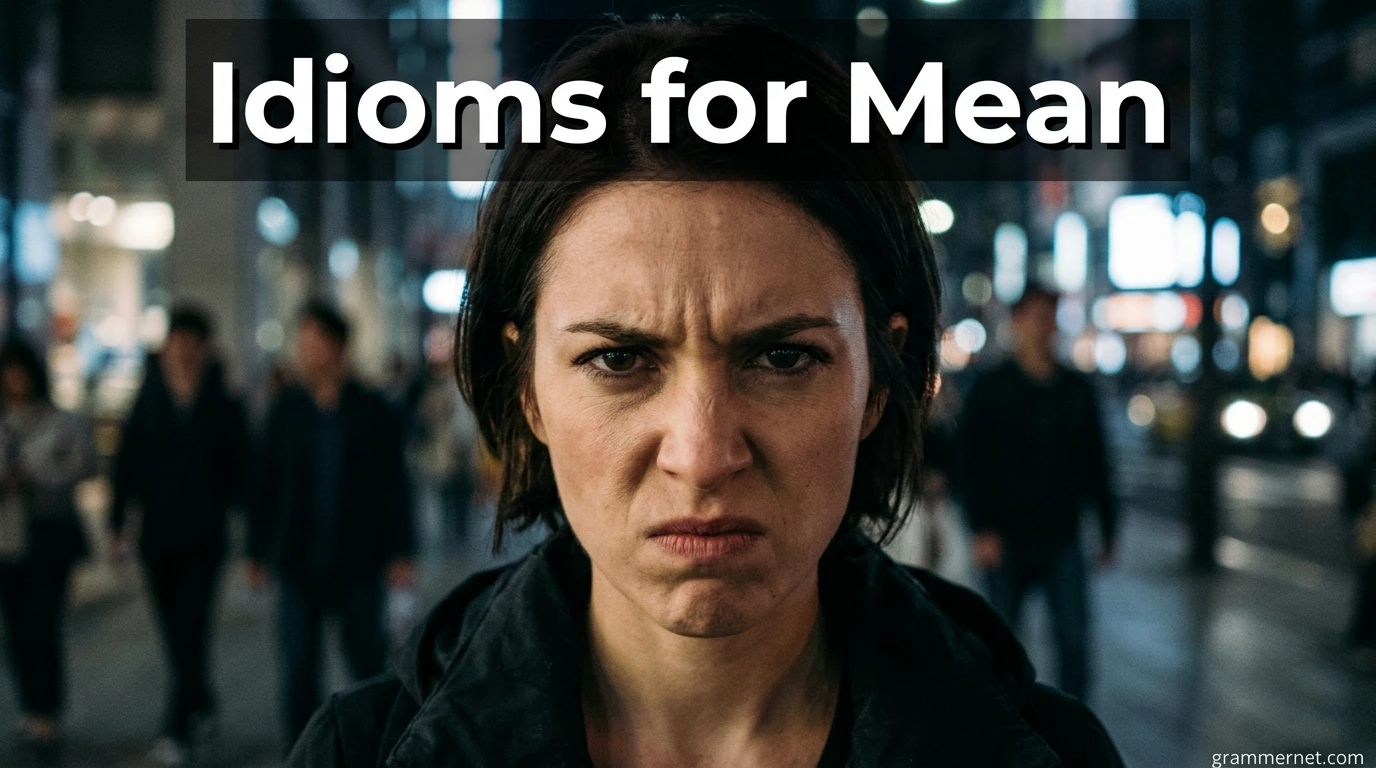
Understanding idioms for mean behavior or personality can help English learners express emotions, describe difficult people, and communicate more naturally in conversations. These idioms are widely used in movies, books, workplaces, and everyday speech, making them valuable for students and professionals alike.
Learning these expressions also improves listening comprehension and cultural understanding. Whether you want to describe someone rude, selfish, harsh, or unfriendly, these idioms will make your English more colorful and fluent. In real life, mastering idioms for mean people can help you better understand social situations and express opinions politely yet effectively.
What Are Idioms for Mean?
Idioms for mean are expressions used to describe someone who is rude, cruel, selfish, unfriendly, or unkind. Instead of directly saying “He is mean,” native speakers often use creative phrases and figurative language.
These idioms can describe:
- A person with a bad attitude
- Someone who is stingy or selfish
- Cruel or heartless behavior
- Aggressive communication
- Cold or unfriendly personalities
Learning these idioms helps learners sound more natural and expressive in English conversations.
Common Idioms for Mean People
Cold as Ice
Meaning: Emotionally cold or unfriendly.
Example: “My manager is cold as ice when employees make mistakes.”
Alternative Expressions:
- Heartless
- Emotionless
- Unfriendly
Fun Fact: This idiom compares a person’s emotions to freezing ice.
Typical Use Cases:
- Workplace conflicts
- Family drama
- Describing distant personalities
Bite Someone’s Head Off
Meaning: To respond angrily or aggressively.
Example: “I only asked a question, but she bit my head off!”
Alternative Expressions:
- Snap at someone
- Lash out
- Yell at someone
Typical Situations:
- Stressful environments
- Arguments
- Emotional conversations
Have a Heart of Stone
Meaning: To be very cruel or lacking sympathy.
Example: “The landlord had a heart of stone and refused to help the poor family.”
Alternative Expressions:
- Heartless
- Cruel
- Ruthless
Origin: Stone symbolizes hardness and lack of feeling.
Sharp-Tongued
Meaning: Someone who speaks in a harsh or critical way.
Example: “My aunt is sharp-tongued, but she means well.”
Alternative Expressions:
- Sarcastic
- Harsh speaker
- Critical
Best Contexts:
- Family discussions
- Workplace criticism
- Character descriptions
Kick Someone When They’re Down
Meaning: To treat someone badly when they are already suffering.
Example: “Mocking him after he lost his job was like kicking him when he was down.”
Alternative Expressions:
- Add insult to injury
- Be insensitive
- Take advantage of weakness
Idioms for Selfish or Stingy People
Tightfisted
Meaning: Unwilling to spend money.
Example: “He’s so tightfisted that he never buys gifts.”
Alternative Expressions:
- Cheap
- Stingy
- Miserly
Use Cases:
- Money discussions
- Describing selfish habits
Penny Pincher
Meaning: Someone extremely careful with money.
Example: “My grandfather is a real penny pincher.”
Fun Fact: The idiom comes from pinching pennies to avoid spending.
Alternative Expressions:
- Frugal
- Cheap
- Economical
Looking Out for Number One
Meaning: Caring only about yourself.
Example: “He only looks out for number one.”
Alternative Expressions:
- Self-centered
- Selfish
- Egotistical
Idioms for Rude or Aggressive Behavior
Fly Off the Handle
Meaning: To suddenly become angry.
Example: “She flew off the handle during the meeting.”
Alternative Expressions:
- Lose control
- Explode with anger
- Blow up
Rub Someone the Wrong Way
Meaning: To annoy or irritate someone.
Example: “His arrogant attitude rubs people the wrong way.”
Use Cases:
- Social situations
- Office conflicts
- Personality descriptions
Throw Shade
Meaning: To insult someone indirectly.
Example: “She was throwing shade at her coworker all day.”
Alternative Expressions:
- Mock indirectly
- Insult subtly
- Be sarcastic
Modern Usage: Popular in social media and pop culture.
Idioms for Mean and Unfriendly Attitudes
Give Someone the Cold Shoulder
Meaning: To ignore someone intentionally.
Example: “She gave me the cold shoulder after our argument.”
Alternative Expressions:
- Ignore
- Exclude
- Avoid someone
Sour Grapes
Meaning: Pretending not to care because you cannot have something.
Example: “Calling the competition stupid after losing is just sour grapes.”
Origin: Comes from one of Aesop’s fables.
Bad Mouth Someone
Meaning: To say negative things about someone.
Example: “He constantly bad-mouths his coworkers.”
Alternative Expressions:
- Gossip
- Criticize
- Speak badly
Idioms Grouped by Context
Workplace Idioms for Mean Behavior
- Bite someone’s head off
- Throw shade
- Sharp-tongued
- Rub someone the wrong way
Relationship Idioms
- Give someone the cold shoulder
- Kick someone when they’re down
- Heart of stone
Financial or Selfishness Idioms
- Penny pincher
- Tightfisted
- Looking out for number one
How to Use Idioms for Mean Naturally
Match the Situation
Do not use very strong idioms in formal business settings unless appropriate.
Watch the Tone
Some idioms can sound offensive if used carelessly.
Practice with Real Conversations
Try using one idiom each day in speaking or writing.
Learn Context and Emotion
Understand whether the idiom sounds funny, serious, or insulting.
Common Mistakes to Avoid
Using Idioms Literally
Incorrect: “He really has a stone inside his chest.”
Correct: “He has a heart of stone.”
Overusing Mean Idioms
Using too many negative idioms can make conversations uncomfortable.
Mixing Idioms
Incorrect: “She kicked the cold shoulder.”
Correct: “She gave him the cold shoulder.”
Interactive Practice Exercises
Fill in the Blanks (Easy)
- She ignored me completely and gave me the ______ shoulder.
- He’s such a ______ pincher that he never tips waiters.
- My boss flew off the ______ during the meeting.
Answers
- Cold
- Penny
- Handle
Match the Idiom to the Meaning (Medium)
IdiomMeaningHeart of stoneA. Suddenly angryFly off the handleB. Cruel personThrow shadeC. Indirect insult
Answers
- Heart of stone → B
- Fly off the handle → A
- Throw shade → C
Advanced Writing Challenge
Write a short paragraph describing a difficult coworker using at least three idioms from this article.
Suggested Idioms:
- Sharp-tongued
- Rub someone the wrong way
- Give the cold shoulder
Mini Quiz on Idioms for Mean
Question 1
Which idiom means “to ignore someone”?
A. Throw shade B. Give the cold shoulder C. Fly off the handle
Answer: B
Question 2
Which idiom describes someone who is cheap?
A. Penny pincher B. Heart of stone C. Bite someone’s head off
Answer: A
Question 3
What does “kick someone when they’re down” mean?
A. Physically attack someone B. Help someone in trouble C. Treat someone badly during hard times
Answer: C
Tips for Remembering Idioms Easily
Use Flashcards
Write the idiom on one side and the meaning on the other.
Watch English Movies
Many idioms appear in TV shows and movies.
Practice in Conversations
Use idioms with friends or language partners.
Group Idioms by Emotion
Learning by themes makes memorization easier.
Visual and Infographic Suggestions
To make this topic more engaging, consider adding:
- A chart grouping idioms by emotion
- Cartoon illustrations of idioms
- Comparison tables of formal vs informal idioms
- Conversation examples in comic-strip format
- Color-coded vocabulary maps
Why Learning Idioms for Mean Improves English Fluency
Idioms are an essential part of natural English communication. Native speakers rarely speak only in literal language. Understanding idioms for mean behavior helps learners:
- Understand movies and TV dialogue
- Improve speaking confidence
- Sound more fluent and expressive
- Describe emotions accurately
- Communicate personality traits effectively
FAQs
What are idioms for mean people?
Idioms for mean people are expressions used to describe rude, selfish, cruel, or unfriendly behavior in a figurative way.
Why should English learners study idioms?
Idioms improve fluency, listening skills, and cultural understanding. They also make speech sound more natural.
Are idioms formal or informal?
Most idioms are informal, but some can be used in professional conversations depending on the context.
What is the difference between “mean” and “rude”?
“Mean” often suggests cruelty or unkindness, while “rude” focuses more on bad manners.
How can I memorize idioms quickly?
Practice daily, use flashcards, watch English media, and group idioms by topic or emotion.
Can idioms have multiple meanings?
Yes. Some idioms change meaning depending on context and tone.
Conclusion
Learning idioms for mean behavior is a powerful way to improve your English vocabulary and communication skills. These expressions help learners describe emotions, attitudes, and personalities in a more colorful and natural way. From “heart of stone” to “throw shade,” each idiom adds depth and personality to conversations.
By practicing these idioms regularly, using them in real-life situations, and understanding their emotional tone, you can become a more confident English speaker. Keep reviewing examples, try the exercises, and challenge yourself to use new idioms in conversations every day. Over time, these expressions will become a natural part of your English fluency journey.
