
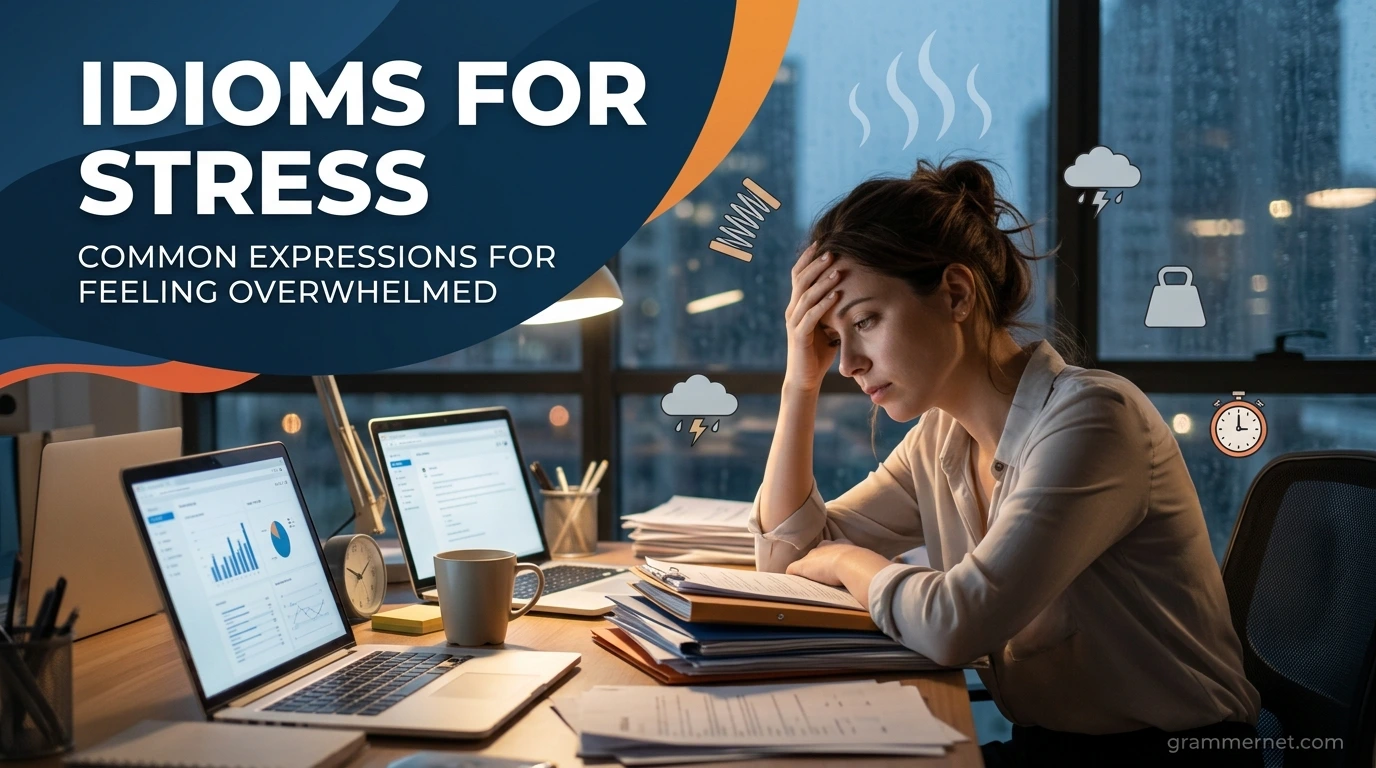
Idioms for stress are powerful expressions that help English learners describe pressure, anxiety, frustration, and emotional tension in a natural and fluent way. These idioms are commonly used in workplaces, schools, relationships, and everyday conversations, making them essential for students, professionals, and language learners alike.
Understanding stress-related idioms can improve your communication skills, help you connect emotionally with native speakers, and make your English sound more expressive. Whether you are talking about deadlines, exams, work pressure, or personal challenges, these phrases allow you to explain stressful situations with confidence and clarity.
What Are Idioms for Stress?
Idioms for stress are figurative expressions used to describe mental pressure, emotional tension, nervousness, exhaustion, or overwhelming situations. Instead of saying “I am very stressed,” native speakers often use colorful idioms that paint a vivid picture of their emotions.
For example:
- “I’m under the gun.”
- “She’s at the end of her rope.”
- “He’s feeling the pressure.”
These phrases make conversations more engaging and natural.
Why Learning Stress Idioms Is Important
Learning idioms for stress can help you:
- Understand movies, TV shows, and conversations better
- Express emotions naturally in English
- Improve speaking and writing fluency
- Sound more confident in professional settings
- Build emotional vocabulary for real-life communication
Stress idioms are especially useful because stress is a universal human experience. People talk about it often at school, work, and home.
Common Idioms for Stress
Under the Gun
Meaning
Being under pressure or facing urgent demands.
Example
“We are under the gun to finish the project before Friday.”
Alternative Expressions
- Under pressure
- In a tight spot
- Facing a deadline
Typical Use Cases
- Work deadlines
- Exams
- Emergency situations
Fun Fact / Origin
This idiom originally referred to soldiers being threatened by guns during battle, symbolizing intense pressure.
At the End of One’s Rope
Meaning
Feeling exhausted, frustrated, or unable to continue handling stress.
Example
“After dealing with nonstop problems, she was at the end of her rope.”
Alternative Expressions
- Burned out
- Emotionally drained
- Fed up
Typical Use Cases
- Emotional stress
- Family issues
- Work overload
Fun Fact / Origin
The phrase comes from the image of someone hanging onto the last bit of a rope with nowhere else to go.
Feel the Pressure
Meaning
To experience stress because of expectations or responsibilities.
Example
“He feels the pressure before every important presentation.”
Alternative Expressions
- Be stressed out
- Be nervous
- Feel overwhelmed
Typical Use Cases
- Sports
- School exams
- Business meetings
Stress Out
Meaning
To become anxious or overwhelmed.
Example
“Don’t stress out over small mistakes.”
Alternative Expressions
- Panic
- Worry excessively
- Freak out
Typical Use Cases
- Daily life
- Student life
- Busy schedules
Have a Lot on One’s Plate
Meaning
To have too many responsibilities or tasks.
Example
“She has a lot on her plate this month.”
Alternative Expressions
- Be very busy
- Be overloaded
- Be overwhelmed
Typical Use Cases
- Work
- Parenting
- Studies
Fun Fact / Origin
The idiom compares responsibilities to food piled onto a dinner plate.
Burn the Candle at Both Ends
Meaning
To work too hard without enough rest.
Example
“He’s been burning the candle at both ends preparing for exams.”
Alternative Expressions
- Overwork yourself
- Push too hard
- Exhaust yourself
Typical Use Cases
- Students
- Professionals
- Entrepreneurs
Fun Fact / Origin
Candles burn faster when lit at both ends, symbolizing energy being used too quickly.
Carry the Weight of the World on Your Shoulders
Meaning
To feel extremely worried or responsible.
Example
“She carries the weight of the world on her shoulders.”
Alternative Expressions
- Feel overwhelmed
- Be burdened
- Carry heavy responsibilities
Typical Use Cases
- Family responsibilities
- Leadership roles
- Emotional struggles
Pull Your Hair Out
Meaning
To become extremely frustrated or stressed.
Example
“I was pulling my hair out trying to fix the computer.”
Alternative Expressions
- Lose patience
- Feel frustrated
- Go crazy with stress
Typical Use Cases
- Technical problems
- Parenting
- Difficult tasks
Snowed Under
Meaning
To have too much work to handle.
Example
“I’m completely snowed under with assignments.”
Alternative Expressions
- Overloaded
- Swamped
- Extremely busy
Typical Use Cases
- Office work
- Homework
- Business deadlines
Fun Fact / Origin
The image suggests being buried under a heavy amount of snow.
Keep One’s Head Above Water
Meaning
To survive financially or emotionally during difficult times.
Example
“With rising bills, they are struggling to keep their heads above water.”
Alternative Expressions
- Survive
- Manage somehow
- Stay afloat
Typical Use Cases
- Financial stress
- Emotional pressure
- Business struggles
Bite Off More Than You Can Chew
Meaning
To take on too much responsibility.
Example
“He bit off more than he could chew by accepting three jobs at once.”
Alternative Expressions
- Overcommit
- Take on too much
- Overload yourself
Typical Use Cases
- Work
- School
- Personal projects
Walking on Thin Ice
Meaning
Being in a risky or stressful situation.
Example
“He’s walking on thin ice after missing several deadlines.”
Alternative Expressions
- In danger
- At risk
- In trouble
Typical Use Cases
- Workplace problems
- Relationships
- School discipline
Crack Under Pressure
Meaning
To fail or lose control because of stress.
Example
“Some athletes crack under pressure during big games.”
Alternative Expressions
- Break down
- Lose confidence
- Panic
Typical Use Cases
- Sports
- Public speaking
- Exams
Running Around Like a Headless Chicken
Meaning
Being extremely busy and confused.
Example
“I’ve been running around like a headless chicken all day.”
Alternative Expressions
- Chaotic
- Disorganized
- Frantically busy
Typical Use Cases
- Busy offices
- Event planning
- Family emergencies
On Edge
Meaning
Feeling nervous, tense, or anxious.
Example
“She’s been on edge since the interview.”
Alternative Expressions
- Nervous
- Tense
- Uneasy
Typical Use Cases
- Waiting for results
- Stressful events
- Difficult situations
Idioms for Stress Grouped by Context
Workplace Stress Idioms
- Under the gun
- Snowed under
- Burn the candle at both ends
- Have a lot on one’s plate
Example
“The team is under the gun to finish the campaign.”
Emotional Stress Idioms
- At the end of one’s rope
- Carry the weight of the world
- On edge
- Pull your hair out
Example
“She felt at the end of her rope after weeks of pressure.”
Financial Stress Idioms
- Keep one’s head above water
- Bite off more than you can chew
Example
“They’re trying to keep their heads above water financially.”
High-Pressure Performance Idioms
- Crack under pressure
- Feel the pressure
- Walking on thin ice
Example
“Many people crack under pressure during interviews.”
Tips for Using Idioms for Stress Effectively
Match the Idiom to the Situation
Use workplace idioms at work and emotional idioms in personal conversations.
Pay Attention to Formality
Some idioms are informal, such as “running around like a headless chicken.”
Learn Through Context
Practice idioms inside complete sentences rather than memorizing isolated phrases.
Avoid Overusing Idioms
Using too many idioms at once can sound unnatural.
Listen to Native Speakers
Movies, podcasts, and TV shows are excellent for hearing stress idioms naturally.
Common Mistakes to Avoid
Taking Idioms Literally
“Burn the candle at both ends” is not about actual candles.
Using Informal Idioms in Formal Writing
Avoid overly casual idioms in academic essays.
Confusing Similar Idioms
“Snowed under” means overloaded with work, while “under the gun” means pressured by deadlines.
Incorrect Word Order
Say “at the end of my rope,” not “at my rope’s end.”
Interactive Exercises
Fill-in-the-Blank Activity (Easy)
Choose the correct idiom.
- I’m completely ______ under with paperwork.
- She felt the ______ of the final exam.
- He is burning the candle at both ______.
Answers
- snowed
- pressure
- ends
Match the Idiom to the Meaning (Medium)
IdiomMeaningUnder the gunA. Very stressed and overloadedSnowed underB. Under pressureOn edgeC. Nervous or tense
Answers
- Under the gun → B
- Snowed under → A
- On edge → C
Choose the Best Idiom (Advanced)
- Someone is overwhelmed with work.
- Someone is emotionally exhausted.
- Someone fails because of stress.
Answers
- Snowed under
- At the end of one’s rope
- Crack under pressure
Quick Quiz
Question 1
Which idiom means “too busy with work”?
A. Walking on thin ice B. Snowed under C. On edge
Answer: B
Question 2
Which idiom means “emotionally exhausted”?
A. At the end of one’s rope B. In hot water C. Break the ice
Answer: A
Question 3
Which idiom describes nervousness?
A. Burn the candle at both ends B. On edge C. Keep your cool
Answer: B
Real-Life Situations Where Stress Idioms Are Useful
At School
- “I’m stressed out about my exams.”
- “I’ve got a lot on my plate this semester.”
At Work
- “We’re under the gun to meet the deadline.”
- “The manager is snowed under with emails.”
In Personal Life
- “She’s carrying the weight of the world on her shoulders.”
- “I’m at the end of my rope.”
During Financial Problems
- “We’re trying to keep our heads above water.”
Suggestions for Visuals and Infographics
To make learning easier, create visuals such as:
- A person buried in papers for “snowed under”
- A candle burning from both ends
- Someone balancing above water
- A clock showing deadline pressure
- A rope symbolizing emotional exhaustion
Visual learning helps students remember idioms faster.
Why Idioms for Stress Matter in English
Stress-related idioms are part of daily communication. Native speakers use them constantly in workplaces, classrooms, movies, and casual conversations. Learning these expressions helps you sound more fluent, emotionally aware, and confident in English.
They also improve listening comprehension because many stress idioms appear in news reports, TV dramas, and social media conversations.
FAQs
What are idioms for stress?
Idioms for stress are figurative expressions used to describe pressure, anxiety, frustration, or emotional exhaustion.
Why should I learn stress idioms?
They help you sound more natural in English and improve your understanding of native speakers.
What does “under the gun” mean?
It means being under pressure to complete something quickly.
What is the meaning of “snowed under”?
It means having too much work or responsibility.
Is “burn the candle at both ends” positive or negative?
Usually negative because it describes overworking and exhaustion.
What does “on edge” mean?
It means feeling nervous, tense, or anxious.
Can stress idioms be used in business English?
Yes, many stress idioms are commonly used in professional environments.
Conclusion
Idioms for stress help English learners describe emotions, pressure, and difficult situations in a vivid and natural way. From “under the gun” to “at the end of one’s rope,” these expressions make communication more expressive and relatable. By learning their meanings, practicing them in context, and avoiding common mistakes, you can improve both your speaking and writing skills. Keep practicing these idioms in daily conversations, workplace discussions, and study sessions to become more fluent and confident in English.
